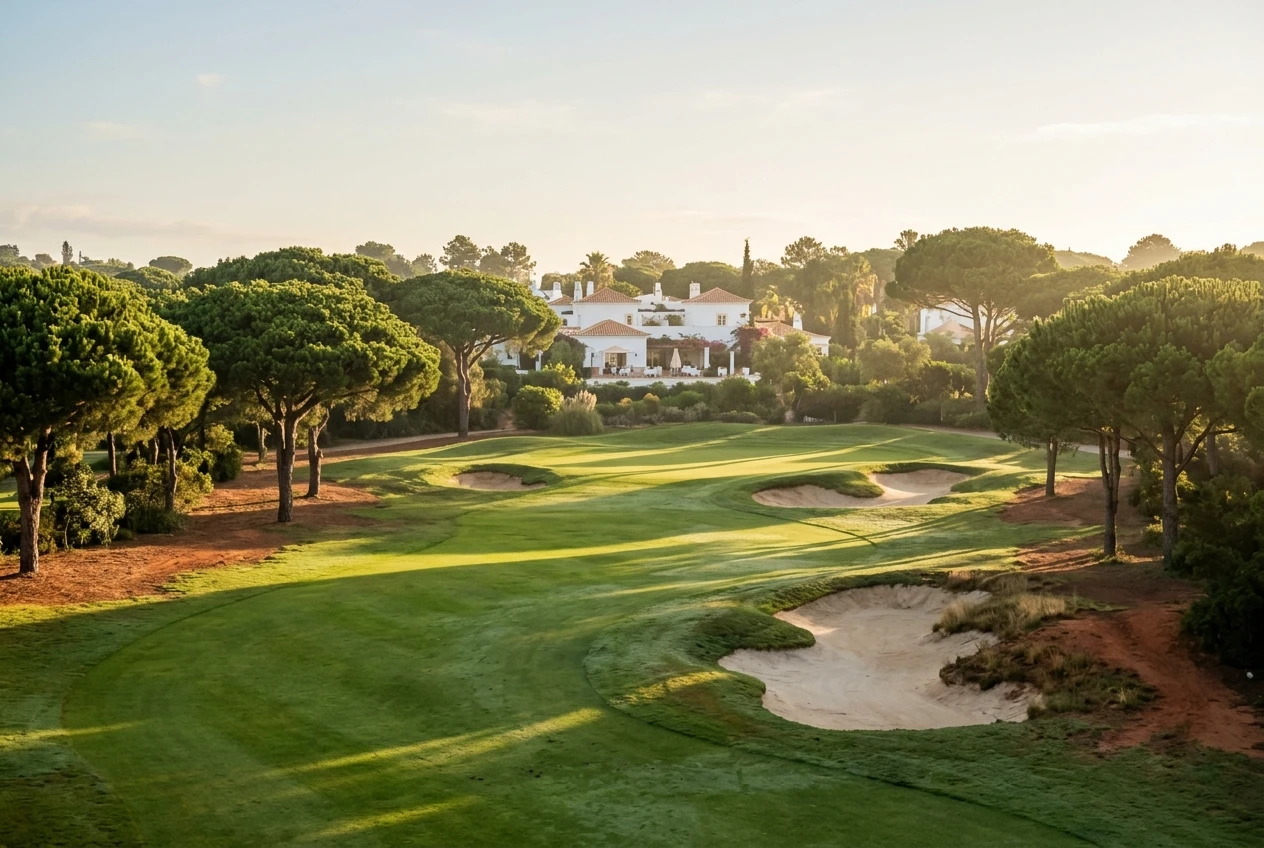
Golf in Northern Italy: How to Choose Between the Lakes and the Dolomites
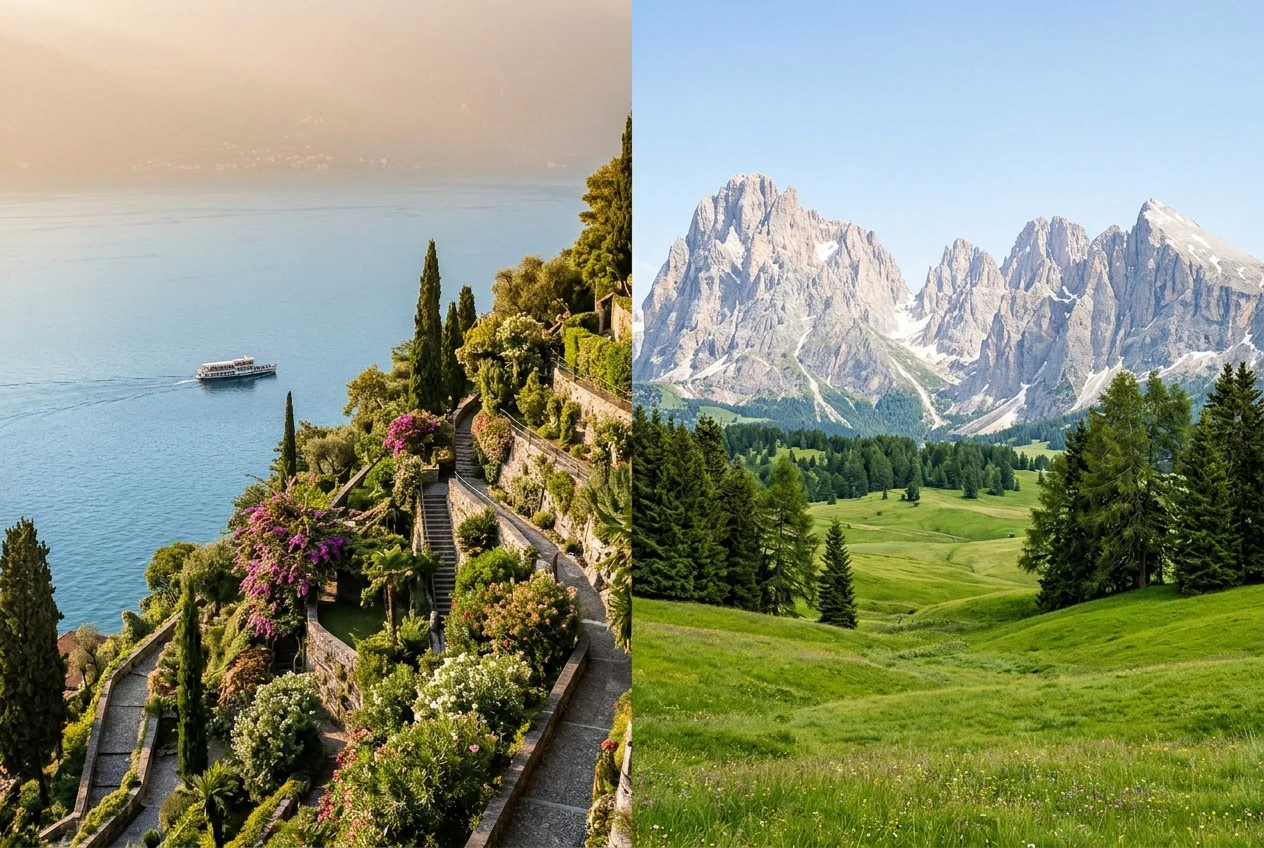
Golf in Northern Italy is really two trips that share a country. One is built around a lake, with slow mornings, terraced gardens, a ferry across the water and a round in warm, humid air. The other is built around mountains, with thinner air, jagged limestone behind every fairway and a cooler, quicker rhythm. You can do either well, and you can combine them, but the trip goes better if you decide which one is your base before you look at a single tee sheet.
This guide covers the area north of the Po: Lake Como, Lake Maggiore, Lake Garda and the Dolomites. It compares scenery, pace, drive times and the kinds of hotels you will find, so you can choose a base and then add a second leg without losing days on the road. If you are still weighing the Mediterranean coast and the islands, our guide to Italy’s best golf resorts covers that side of the country.
Two Northern Italys: why the lakes and the Dolomites make different golf trips
The lakes sit at low elevation, close to Milan and Verona, and the climate is mild for much of the year. Courses tend to be parkland: tree-lined, often hilly, with water views appearing between holes. The hotels are the point of the region. Grand lakefront properties, villas with private gardens and small boutique places all cluster along the shoreline, and the non-golf hours (a boat trip, a long lunch, a walk through a lakeside town) carry as much of the trip as the rounds do.
The Dolomites are a different proposition. The golf is set in alpine valleys and meadows, at elevations where the season is shorter and the weather changes faster. The towns have their own food and culture, with strong Austrian and Ladin influences in South Tyrol, and the hotels lean toward spa-focused alpine retreats rather than lakeside palaces. The scenery is more dramatic, and the pace is more outdoors-driven: hikes, cable cars and mountain huts fill the hours between rounds.
A useful way to choose:
- Pick the lakes if you want the most relaxed rhythm, the widest choice of luxury hotels, a longer playing season and easy access from Milan or Verona airports.
- Pick the Dolomites if the scenery is the reason you are going, you like cooler weather, and you are happy with a smaller number of courses to choose from.
- Pick both if you have at least a week and are comfortable with one transfer day.
Playing the lakes: what a round near Como, Maggiore or Garda feels like
Lake golf is generally a walk-in-the-park kind of golf in the best sense. Fairways run through mature trees, greens are usually well kept, and the setting does a lot of the work. You will often play with a view of water or mountains somewhere on the back nine, and the clubhouse terrace is part of the experience, so allow time to sit down afterwards.
Each lake has its own character:
- Lake Como is the most polished and the most scenic. It has a few well-regarded clubs within reach of the lake, including Circolo Golf Villa d’Este at Montorfano, and a hotel scene that suits travelers who want a formal-but-warm atmosphere. Expect higher prices and busier roads in summer.
- Lake Maggiore is calmer and a little more old-fashioned. It suits golfers who want quiet, gardens and a slower pace, with the Borromean Islands and the Piedmont side of the lake nearby.
- Lake Garda is the largest and the most varied. It has the most courses of the three lakes, a more international feel and a mix of grand hotels, resorts and family-friendly stays. It is also the natural gateway to the Dolomites, which matters if you plan a two-part trip.
Most lake courses are on rolling or hilly ground, so check whether carts are expected or optional, and ask the club about walking if you prefer to carry. Club dress codes are usually relaxed by Italian standards but still smart, so pack collared shirts and avoid anything that looks like gym wear. Booking through a hotel or a reputable partner usually makes the club’s guest-play rules easier to navigate.
Playing the mountains: alpine golf, altitude and what changes in your game
Alpine golf in the Dolomites is the more memorable of the two settings for many golfers. Fairways sit in valleys or on plateaus, with rock walls and pine forests behind the greens, and the courses are often shorter in yardage than what you would find on the lakes. Clubs such as Golf Club Carezza in South Tyrol are known for being set in a forest and meadow landscape under the peaks.
Altitude changes the game in a few practical ways:
- The ball travels farther. Thinner air means less drag, so many players find their irons fly longer than at sea level. Expect to take less club on some shots, and check your yardages on the first few holes before you commit.
- Slopes decide the shot. Mountain courses tend to have more uphill and downhill lies, and putts can break toward the valley more than they appear to. Ask your caddie or the pro shop about the grain and the general fall of the greens.
- Weather changes faster. Mornings may be cool and clear, with cloud or an afternoon shower arriving later. Pack a light waterproof layer and a warm mid-layer even in summer.
- Energy and hydration. Walking at altitude tires some people sooner. Drink more water than you think you need, and plan your most demanding round for the day after you arrive, not the day of the transfer.
Mountain courses are fewer and often smaller clubs, so there is less choice on any given day. That makes booking early more important than it is at the lakes.
Where to stay: a lakeside grand hotel, a villa or an alpine retreat
Your hotel will shape the trip as much as the course list, so decide on the kind of stay before you choose the destination.
A lakeside grand hotel is the classic choice. You get formal dining, a lakefront setting, spa facilities and staff who can arrange boat trips, tee times and transfers. It suits couples and small groups who want a polished base with everything on site. The trade-off is that you are usually paying for the setting as much as the golf, and the nearest course may be a drive away rather than next door.
A private villa suits groups of friends or families who want space and privacy. You can hire a chef, set your own schedule and still reach several courses within a reasonable drive. The trade-off is that you will probably need a driver or a rental car, and you will need to organise more of the daily logistics yourself.
An alpine retreat in the Dolomites generally means a wellness-oriented hotel with a spa, a regional restaurant and mountain views from the room. These are comfortable without being stiff, and many have a relaxed, family-run feel. They suit golfers who want to combine a few rounds with walking and recovery. Check how close the hotel is to the course you want, because valley roads can add time.
If you want a luxurious trip without formality, the villa and the alpine retreat both tend to feel less buttoned-up than a grand lakeside hotel, though many grand hotels are friendlier than their reputation suggests.
Pairing a lake base with a mountain leg without wasting your days in the car
A two-base trip works well when the transfer is short and the order makes sense. Lake Garda is the usual pivot, since it is the lake closest to the Dolomites. The drive from the northern end of Garda to the Bolzano area is roughly two hours by motorway, depending on traffic and where in the mountains you end up, and the road is straightforward. Lake Como and Lake Maggiore are further from the Dolomites, so a combination with either of them adds drive time and is worth planning carefully.
A few principles keep the transfer from eating your trip:
- Move on a non-golf morning. Leave after breakfast, stop for lunch somewhere worth stopping, and play the next day instead of squeezing in a round on arrival.
- Stay at least three nights in each base. A single night in either place means you spend most of the time packing and unpacking.
- Go lakes first, mountains second, or the reverse, but decide by season. In late spring and early autumn the lakes are usually the safer place to start or finish, while the mountains are at their best in the middle of the playing season.
- Use a driver if you can. Alpine roads and lakeside roads can be narrow, and a driver lets you enjoy the scenery. If you rent a car, check parking at the hotel and clubs, and be aware that some Italian town centres restrict traffic.
A one-week trip might sensibly be four nights at Garda and three in the Dolomites. A ten-day trip allows a longer lake stay, or a third stop on Como or Maggiore, but drive times begin to add up quickly.
Timing the trip: how to check seasons, course openings and tee time availability
The season is the most important variable and the one you should not guess at. Lake courses usually offer a longer playing window, while alpine courses open later and close earlier because of snow cover. Exact opening and closing dates vary from year to year and from club to club, so confirm them with the course directly or through your booking partner before you commit to flights.
A practical checklist for timing:
- Check each club’s published opening dates for 2027 if you are planning ahead, and look for any scheduled maintenance closures.
- Look at the weather pattern for your target month, especially rain and temperature in the mountains.
- Find out whether the club requires guests to present a handicap certificate or a membership card from a home club, and have it ready.
- Ask whether the course has tournament days or member-only mornings that reduce visitor tee times.
- Ask about buggy and caddie availability, and whether they need to be reserved in advance.
- Book tee times for your most-wanted courses first, then fit hotel nights around them.
Tee times at smaller or more exclusive clubs can be limited, particularly in peak weeks. A tee time platform or a hotel concierge can often show real-time availability, which is more reliable than a general web search.
Which parts to book yourself and which to hand to someone who knows the region
You can book flights, a hotel and a rental car yourself with little difficulty. Where help earns its fee is in the details that are hard to see from outside: which courses accept guests on which days, which hotels have real relationships with nearby clubs, and how to link a lake stay with a mountain stay without a wasted day.
A reasonable division is this:
- Book yourself: flights, the hotel you have already chosen, a simple rental car if you are comfortable with Italian roads, and any restaurant you particularly want.
- Hand over: tee times at clubs that restrict guest play, private drivers between the two bases, villa arrangements, and the itinerary as a whole if your group is large or your dates are tight.
How much help you need depends on group size, the number of clubs you want to play and how flexible your dates are. We cover that decision in detail in our piece on whether you need a concierge for your Italian golf trip, which sets out three questions to ask yourself before you pay for planning support.
Ready to shape your route? Compare Northern Italy golf packages and check tee time availability through our booking partners, then build the trip around the base you chose.
Related Post

Leading Brands In Compact Golf Equipment Solutions
Compact golf equipment is making waves, and for good reason. Golfers everywhere are flocking to [...]