
A Pacific Northwest Golf Pilgrimage Built Around Four Regions, and the Stay That Suits Each
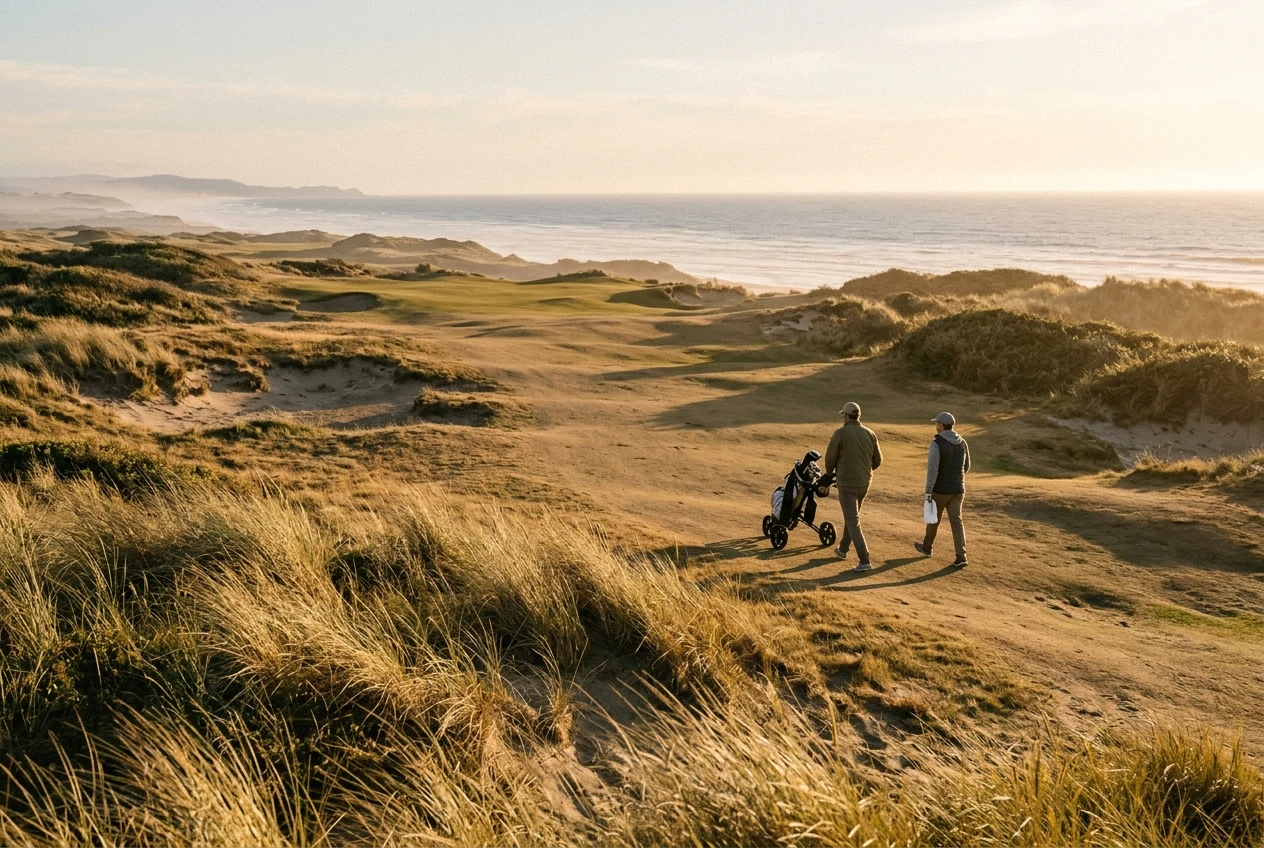
Most golf trips to this corner of North America begin with one famous name and one long weekend. The Pacific Northwest rewards a wider plan. The best-known stops are hundreds of miles apart, and each one offers a different kind of golf, a different landscape and a different style of stay. Seaside links, high-desert lodges, a public course near a major city and a mountain resort fit into one itinerary without repeating each other.
The catch is that these regions do not connect as neatly as a single resort week. A Pacific Northwest golf trip works when you choose regions that link sensibly, fly into one airport and out of another, and book in an order that protects the hardest reservations first. This guide matches each region to a kind of stay and a kind of traveler, then covers the logistics.
Why the Pacific Northwest rewards a multi-stop trip
A single-resort week suits golfers who want to unpack once and stay put. A multi-stop route suits golfers who want contrast, and this region has plenty of it. In one trip you can play firm, wind-exposed ground beside the Pacific, then dry high-desert courses with mountain views, then a public course on Puget Sound, then a resort course set among peaks.
Planning matters more here than in a compact destination. The distances are real, the main airports are far apart, and one stop crosses an international border. A route built with those facts in mind feels relaxed. A route that ignores them spends a day of the trip in a car.
The Oregon coast: Bandon and links-style golf
Bandon Dunes Resort, on the southern Oregon coast, is the anchor for this region. It is a destination built for golf, with several full courses, shorter loops and practice areas on one property. The courses are links-style, which means firm, open ground, wind that changes the club you choose, and routes that favor walking. Most golfers who go there plan to walk, and caddie programs are part of the culture.
The stay that suits it: on-site resort lodging, where the golf, the dining and the evenings are all within a short walk. It is a quiet, unhurried kind of luxury. The appeal is that you wake up near the first tee and finish near the bar, with little reason to drive anywhere.
The trip it suits: golfers who want to play thirty-six holes some days and think about nothing else. It also suits groups of friends. It is less suited to travelers who want a city or a lively town at their door, since the resort is remote by design.
Getting there takes planning. The resort sits a long way from Portland, and the closer airports at North Bend and Eugene are smaller, with fewer flight options. Check current schedules and drive times before you commit to an arrival airport, and allow a full travel day at each end.
Central Oregon’s high desert: golf, lodges and downtime
Central Oregon, around Bend and Redmond, offers a different pace. The courses sit among ponderosa pines, juniper and lava rock, under a dry, bright sky. The region has several well-regarded options, including Tetherow, Pronghorn, Brasada Ranch, Sunriver and Black Butte Ranch, and some of them pair golf with a full lodge or ranch stay.
The stay that suits it: a destination resort or ranch lodge, where golf is one of several things to do. Many of these properties offer spas, pools, restaurants and trails. Bend itself works as a base if you prefer a walkable town for dinners and an easy rhythm between rounds.
The trip it suits: couples and mixed groups where not everyone wants to play every day. It also suits golfers who want the round to be one part of a day instead of the whole day. Redmond Airport is close to the region and makes arrivals simpler than at the coast.
Puget Sound and Chambers Bay: a city-adjacent stop
Chambers Bay, near Tacoma, is a public-access course that hosted the U.S. Open in 2015. It sits on a former gravel quarry beside Puget Sound, with fescue grass, big elevation changes and water views across the course. It is built to be walked, and it has the feel of a links even though the setting is very different from Bandon.
The stay that suits it: a city hotel in Tacoma or Seattle. This stop is less about a secluded resort and more about combining golf with restaurants, waterfront walks and sightseeing. A polished hotel with good dining nearby often suits this stop better than a golf lodge would.
The trip it suits: travelers who want one marquee public round without committing days to a remote destination. It works well at the start or end of a longer route because Seattle-Tacoma International Airport is a major hub with plenty of flights. It is also a good stop for non-golfing partners, since the city has plenty to fill the hours.
Whistler and British Columbia: mountain golf and the border
Whistler brings mountain scenery and a resort village. Courses here include those at Whistler Golf Club, Fairmont Chateau Whistler and Nicklaus North, set among forest, lakes and peaks. The golf season is shorter than in many destinations, so check current opening dates before you build a plan around it.
The stay that suits it: a village resort hotel. Fairmont Chateau Whistler has its own course, and the village offers a wide range of dining, spas and other stays within walking distance. This is the most resort-like of the four regions, with an atmosphere to match.
The trip it suits: golfers who want a scenic round alongside non-golf activities, and travelers happy to build a day or two around the mountains as much as the golf course. Whistler is roughly two hours by road from Vancouver International Airport, which makes Vancouver the natural arrival point.
Crossing the border: if you drive from Washington into British Columbia, carry valid passports and check current entry requirements for your nationality before you travel. If you rent a car, confirm with the rental company that cross-border travel is allowed, and ask about one-way fees. Allow extra time at the crossing, since waits can vary.
Which two or three regions to combine
Trip length and travel style decide the combination. These are suggestions to adapt.
- A week, links focus: the Oregon coast alone, or the coast paired with Central Oregon if you accept one long travel day between them.
- A week, mixed travelers: Central Oregon and Puget Sound. The flight between Redmond and Seattle is short, and the two stops balance a lodge stay with a city stay.
- Ten days to two weeks, the full sweep: Bandon, Central Oregon and Puget Sound, with Whistler added if the season and the budget allow it.
- A week, scenery focus: Puget Sound and Whistler, which pair naturally through Seattle and Vancouver.
Two regions per week is a sensible limit. Each move between regions costs most of a day, and golfers over 40 often find that a round the day after a long transfer is not the best use of a tee time.
Flights, drive days and the order to book
Fly open-jaw wherever you can: arrive at one airport and depart from another, instead of looping back. The Oregon-to-Seattle route is the clearest example. You can arrive near the coast, move through Central Oregon, fly from Redmond to Seattle, and depart from Seattle-Tacoma. If you add Whistler, finishing in Vancouver avoids a second trip back through the border.
Check drive times on a mapping app for your exact travel dates, then add buffer. Do not schedule an afternoon tee time on a day with a long transfer. Treat each transfer day as a rest day or a short, late round.
Book in this order:
- Anchor lodging and tee times at the most constrained stop. For most golfers this is the Oregon coast, where resort stays and tee times can fill early. Check each property’s booking window and book as soon as your dates are fixed.
- Set your flights next, once you know which airports your anchor stops require.
- Book the remaining stays and tee times, working outward from the anchor.
- Add transport last: rental cars, transfers and any cross-border permissions.
The same sequencing logic applies in Europe. Our guide to planning a multi-course golf trip to southwest Ireland walks through bases, drive times and booking order for a different region, and the principles carry over.
Once you have chosen your regions, compare tee times, stays and packages through our golf travel booking partners so the whole route is planned before you fly.
Related Post

Why New Zealand Is A Hidden Gem For Golfers
New Zealand’s breath-taking landscapes serve as the backdrop for some truly outstanding golf courses. Picture [...]