
Luxury Golf in France Once You Leave Paris: Where to Play, Where to Stay
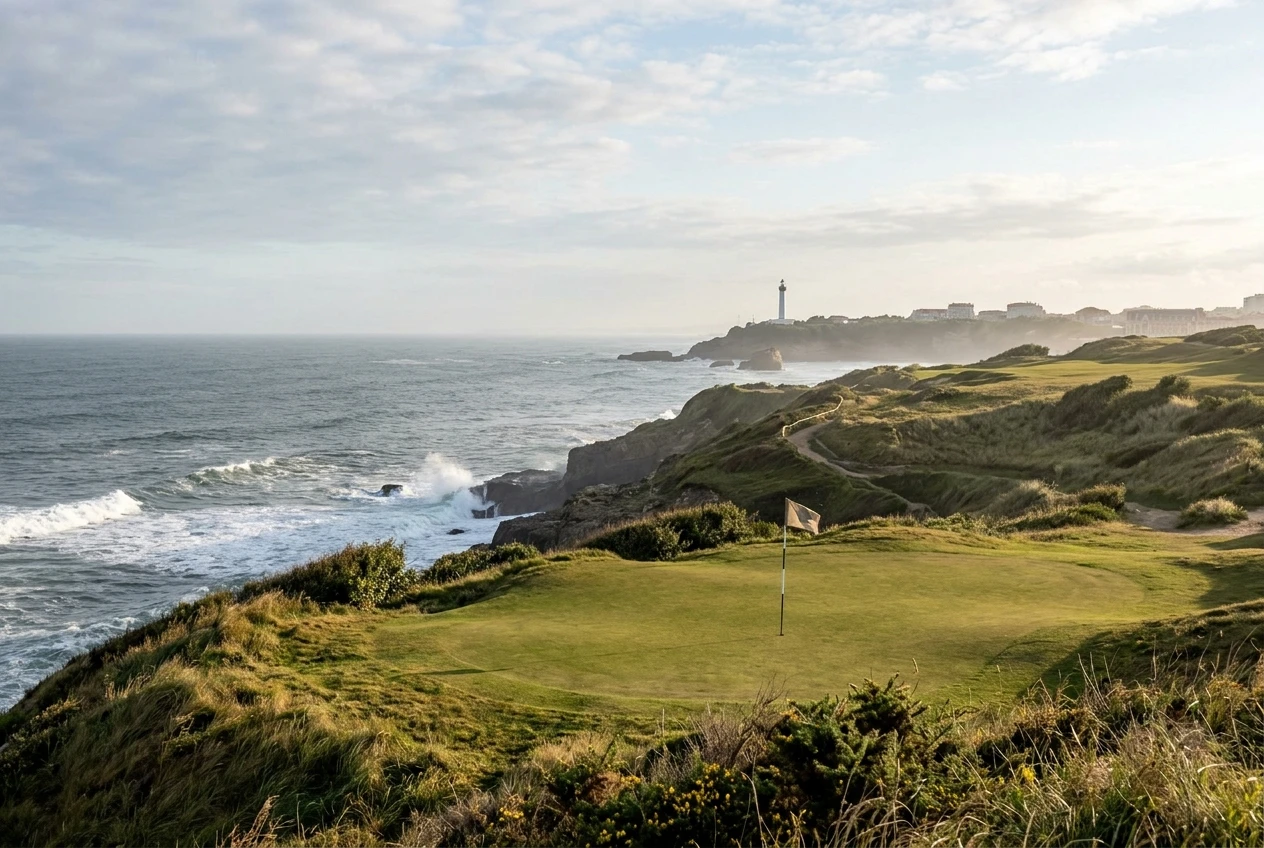
Most visitors to France arrive in Paris and stay there. The golfer who leaves the capital finds something different: regional cooking that changes every hundred kilometres, hotels in converted châteaux and seaside grand dames, and courses that sit in wine country, on cliffs or among pines. The pace suits a golfer who would rather play one good round and have a long lunch than chase a third round before dusk.
This guide covers luxury golf in France across five regions, matching each to a kind of golfer and a kind of trip. Choose a base first and let the courses follow.
Why France rewards the golfer who skips Paris
Paris has respected golf clubs, but its courses are set in a city region and a trip there is shaped by traffic and by access to private clubs. Outside the capital, golf tends to be woven into the place. A round in the Médoc ends among vineyards, and a round in Normandy has the Channel in view and the day’s history around it.
France also suits a trip built around a stay. Many of the best hotels for golfers are châteaux, manor houses or coastal resorts where the dining room matters as much as the first tee. If your idea of a milestone trip includes a good bottle at dinner and a morning with no alarm, France is built for it.
One practical point shapes everything below. French golf is not organised like a links trip to Scotland or Ireland, where visitors often string several famous courses together. Quality is spread across the regions, and the sensible approach is to pick one region, base yourself there and play two or three courses well.
Five regions at a glance: which kind of trip each one suits
Each region suits a different golfer:
- Basque coast and Biarritz: seaside golf, ocean air and a relaxed resort pace. It suits couples and mixed groups where not everyone plays every day.
- Bordeaux and the Médoc: golf arranged around château stays, tastings and long lunches. It suits golfers for whom the cellar matters as much as the course.
- Normandy coast: sea views, cooler weather and a trip with a sense of history. It suits golfers who dislike heat and want sightseeing between rounds.
- Loire Valley: a quieter, countryside trip among châteaux. It suits unhurried travellers who value setting over scorecard.
- Provence and the Riviera hinterland: warm light, hillside courses and a more glamorous feel. It suits milestone celebrations and golfers who want the trip to feel like a holiday first.
Each of these can sustain a four- to seven-night stay with two or three rounds. None needs a rental car for every minute, but some need one more than others, which the transport section covers.
The Basque coast and Biarritz: ocean air, seaside golf and a relaxed pace
Biarritz is where French golf has some of its oldest roots. Le Phare, the Biarritz club, dates to 1888 and is among the earliest courses on the European continent. It sits on a headland above the Atlantic, and a round there is as much about the views and the history as the golf itself.
Nearby, courses such as Chiberta at Anglet and Chantaco at Saint-Jean-de-Luz add pine-lined and parkland variety. Both were laid out by Tom Simpson in the 1920s. That gives the area a cluster of classic-era courses within a short drive of each other, which suits a golfer who wants variety without a lot of transfers.
The Basque coast works because the non-golf day is easy. Biarritz has a beachfront, a market, and a food culture with its own identity, including Basque seafood, local cheeses and the pintxos bars of the nearby Spanish side of the border. A partner who does not play can fill a day without needing a car, and a golfer can play a morning round and be back at the hotel for lunch.
Who it suits: couples, mixed groups and golfers who like the sea. Ocean weather can turn, so bring a waterproof layer whatever the season, and check each club’s visitor rules before you build days around them.
The stay: a seaside resort or grand hotel in Biarritz itself keeps you close to restaurants and the beach. If you prefer quiet, a smaller place near Saint-Jean-de-Luz or among the pines suits a slower trip.
Bordeaux and the Médoc: golf built around château stays and long lunches
The Médoc is the most literal match in France for a golfer who loves wine. The peninsula north of Bordeaux holds some of the world’s best-known wine estates, and the golf sits inside that landscape. Golf du Médoc Resort, a short drive from Bordeaux city, has two 18-hole courses and a hotel on site, so you can play, stay and dine without a rental car.
The appeal of this region is how a day fits together. A morning round can be followed by a long lunch, then an estate visit or tasting booked for the afternoon. For a golfer who has spent years planning to see these estates, that rhythm is the point of the trip.
Plan around how France works at midday. Restaurants serve lunch in a fixed window, usually around noon to two, and many close between services. A late finish on the course can cost you a table, so book the restaurant first and set your tee time around it. Estate visits and tastings generally need to be reserved in advance, and some of the best are by appointment only.
Who it suits: golfers who care about wine, couples celebrating an anniversary or milestone birthday, and groups who want a fixed base with excellent food. This is not the region for someone who wants to play thirty-six holes a day.
The stay: a château hotel in or near the vineyards gives the full experience but usually needs a car or driver for dinners and tastings. A resort with its own course and restaurant simplifies logistics, at the cost of some of the countryside feeling. Bordeaux itself, with its rail connections and airport, makes a good arrival point and a lively place to add a night.
Normandy’s coast: history, sea views and a cooler-weather round
Normandy makes sense for golfers who find southern summers too hot or who want a trip with something more than golf. The Channel coast has dramatic scenery, and the courses use it. Étretat has a course on top of the white cliffs, and Omaha Beach Golf Club at Port-en-Bessin is close to the D-Day landing beaches and offers two courses. Deauville, with its racecourse and seaside promenade, offers a more polished resort setting.
The weather is the trade-off. Normandy is cooler and changeable, which suits a walking golfer who likes fresh air but means waterproofs belong in the bag. Spring and early autumn are sensible times to look at, and checking each club’s seasonal conditions before you book is worth the effort.
The sightseeing is a real advantage. The D-Day sites, Bayeux, Mont-Saint-Michel and the cider and Calvados country are all within reach of the coast, so a rainy or rest day does not go to waste. Seafood is the regional strength, with oysters, scallops and sole alongside Normandy butter and cream.
Who it suits: golfers who value scenery and history, anyone travelling with a non-golfing partner who likes to explore, and people who prefer a cooler climate.
The stay: a seaside hotel in Deauville or a manor house in the countryside inland both work. Choose by whether you want a lively promenade in the evening or a quiet dinner in the country. Allow time for driving between the coast’s different sections, as the golf and sights are spread out.
The Loire Valley and Provence: when the trip is as much about the setting as the score
These two regions suit golfers who treat the course as one part of a beautiful place. Neither has the density of top-tier golf that you find on a links coast, and that is fine if you plan for it.
The Loire Valley
The Loire is the region of river, vineyards and Renaissance châteaux. Golf here is parkland and forest, often attached to a château hotel. Château des Sept Tours near Tours is one example of a course set around a château estate, and Les Bordes, in the Sologne forest, is a destination course that draws serious golfers. Check current visitor access and stay requirements for any club before planning around it, as policies at resort-linked courses vary.
Tours is well connected by train from Paris, which makes the Loire the easiest of the five regions to reach without a flight. A base in a château hotel lets you play a round, tour a neighbouring château and dine on regional dishes, with Loire whites and reds at the table. It is a gentle, unhurried trip.
Provence and the Riviera hinterland
Inland from the coast, Provence and the hills behind Cannes and Nice offer hillside courses with Mediterranean light. Terre Blanche, in the Var hinterland, is a luxury resort with golf on site, and clubs such as Royal Mougins and Cannes-Mandelieu sit closer to the coast. The hinterland is typically quieter and more relaxed than the coastline itself, and the hilltop villages, markets and olive groves give you easy non-golf days.
Summer can be hot and the Riviera busy, so spring and autumn are worth considering for a golfer who wants comfortable rounds. The region also has the highest-profile hotels and restaurants of the five, which suits a milestone celebration where the evening matters as much as the round.
Who each suits: the Loire suits quiet, culture-minded couples and groups. Provence suits golfers who want glamour, warm light and a holiday feel, and who accept that the golf is one pleasure among several.
Getting between course and château: transfers, rental cars and where a driver is worth it
France is easy to drive in. The roads are good, signs are clear, and the autoroutes are fast, though most carry tolls. The question is which parts of your trip suit a car and which suit a driver.
A rental car works well when:
- you are basing yourself in one region and moving between a few courses;
- your group is small and at least one person is comfortable driving on the right and navigating rural roads;
- you want flexibility on days without tee times.
A private driver or transfer is worth the cost when:
- wine is part of the day. Tastings and long lunches do not combine well with driving, and the Médoc is the clearest case;
- you are arriving at a busy airport such as Nice or Bordeaux and heading straight to a hotel;
- you are moving a group with clubs, which fills a rental car quickly;
- the roads are narrow and unfamiliar, as in many Loire and Provence villages.
A sensible compromise is a transfer from the airport or station to your hotel, then a rental car or booked driver on selected days. Ask each hotel what it arranges, since many château hotels and resorts can organise drivers and tastings for guests.
Check club policies on buggies, caddies and visitor tee times before arriving. Some French clubs expect a handicap certificate or proof of club membership from visitors, so carry yours.
Choosing your base and booking in the right order, from tee times to hotel
Pick the region by asking three questions. Do you want wine, sea, history or scenery as the backdrop? How warm do you want to be? Does anyone in your party skip the golf? The answers usually point to one region quickly. The Médoc suits wine lovers, Biarritz suits couples and sea lovers, Normandy suits history and cooler weather, and the Loire and Provence suit setting-first trips.
Then book in this order:
- Fix the dates and the region. Seasonal conditions and hotel availability both depend on this, and popular regions fill up in their best months.
- Secure the tee times at the courses you care most about. Visitor tee times at prestigious or private clubs can be the hardest part of the trip, so confirm these first and set the rest around them.
- Book the hotel around the confirmed tee times. A château or coastal resort will want your dates, and a base near the courses saves daily driving.
- Reserve restaurants and estate visits. Lunch tables and tastings are the items most likely to be fully booked, and a late round can cost you them, so schedule golf around meals rather than the other way round.
- Arrange transfers and any rental car last. These flex around the rest, and you will know exactly where you need to be and when.
If you would rather hand part of this to someone else, it is worth weighing a private golf tour against a group tour before you decide how much to arrange yourself.
Whatever you choose, give the trip room. France rewards the golfer who plays two or three rounds in a region, lingers over lunch and lets the evenings run long, and that is the version of luxury golf in France worth planning.
Ready to pick your region? Compare France golf packages and tee time options through our booking partners and build the trip around the base that suits you.