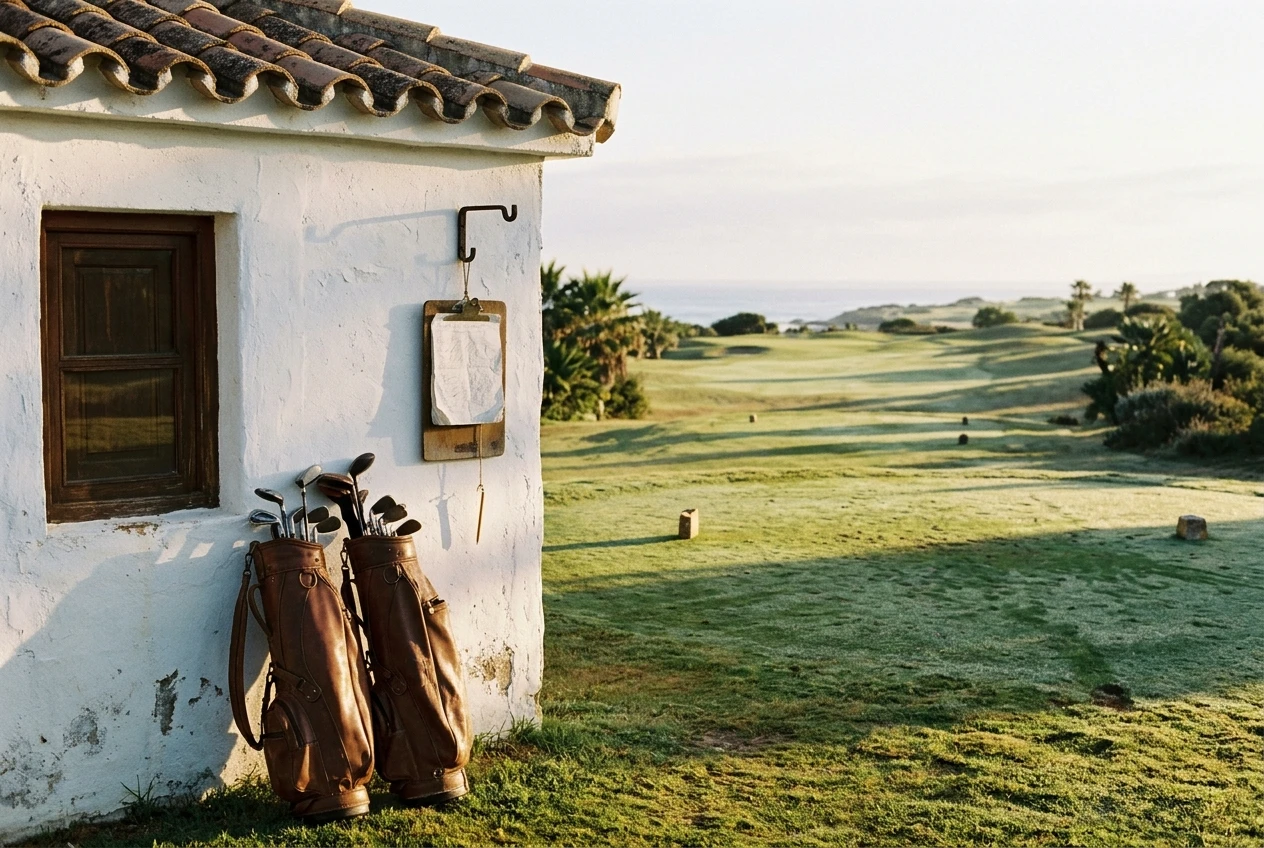
The Unwritten Rules of Golf in Spain, From Tee Times to Tipping
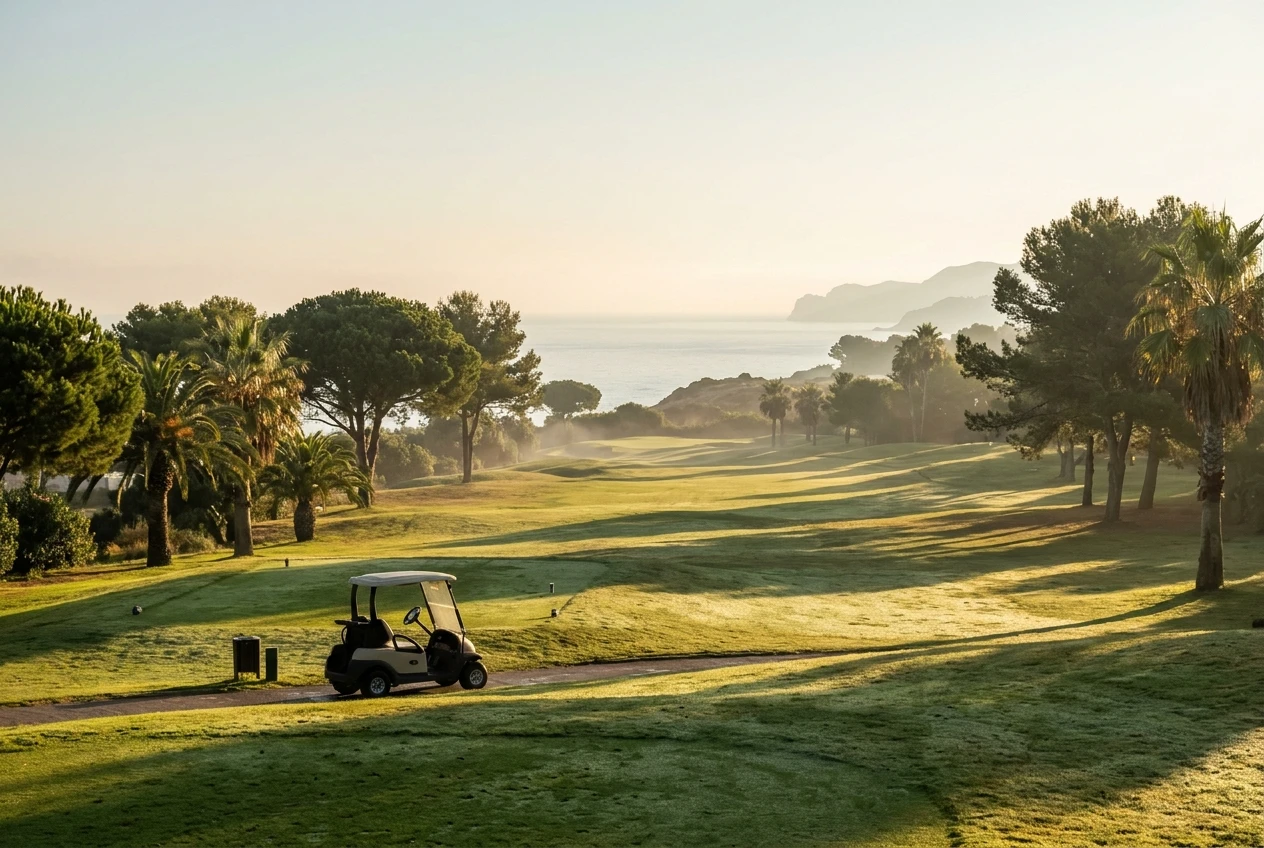
Spanish golf days are organised around the heat and the evening, so a trip planned on a Scottish or Irish rhythm tends to feel slightly off. In Scotland and Ireland the summer light is long and dinner comes early, so the round can sit almost anywhere in the day. In Spain, the middle of the day is often too hot to enjoy, dinner may not start until after nine, and a resort or concierge usually handles the booking between you and the course.
This guide covers the practical side of that rhythm: who holds the tee sheet, when to play, what to confirm about buggies and caddies, how to dress and behave, and how to think about tipping. If you are also planning Ireland, our guide to caddies, cars and tips in Ireland covers a different set of questions. The Spanish ones are mostly about timing and access.
Why a Spanish golf day runs on a different clock
Three things set the pace of a day in Spain: the sun, the long midday meal and the late evening.
In the warmer months, the hours around midday are the hardest to play in. Courses that sit on the coast or inland on exposed ground can be punishing then, and the tee sheet reflects it. Early mornings and late afternoons fill first. Staff, members and local players plan around this without thinking about it.
Lunch is also a proper meal, often taken later than a visitor expects, and dinner follows much later still. A round that finishes at six is not late by local standards. It simply means the evening starts afterwards, with a shower, a rest and a table booked for nine or later.
The third difference is structure. Many Spanish courses are part of a resort, a residential development or a hotel group, and a good share of your access comes through the property rather than the pro shop. Understanding who controls what saves you more trouble than any tip about the courses themselves.
Booking tee times: who controls the sheet and when to ask
Before you ask for a time, find out who actually holds the tee sheet. It varies by course, and the answer shapes how you book.
- Resort courses often give priority to guests of the property, sometimes with times held for them. Staying on site can be the most reliable way to play the course you want at the hour you want.
- Independent or members’ courses may sell visitor times directly, through their own website or through booking platforms.
- Courses tied to a development or hotel group may route visitors through a central reservations team rather than the pro shop.
Whichever applies, ask early for the courses you care about most, and for the hours you want most. The first and last slots of the day are the ones that go first in warm weather, so those are the ones to secure before anything else.
A sensible order is to choose your anchor courses, confirm the tee times, and only then book flights and rooms around them. If you are still choosing a base, our guide to choosing a Costa del Sol golf resort explains how resort access changes the way you plan. When you contact a course or resort, ask exactly what guest access includes, whether times are guaranteed with a room booking, and what the cancellation terms are if you change plans.
Choosing your tee time around the heat, the light and your legs
Pick your tee time by thinking about three things: how hot it will be, how much daylight you have, and how your body handles 18 holes.
Heat. In the warmer months, an early morning start gives you the coolest conditions and usually a quicker, quieter course. A late afternoon time can also work well, with softer light and a lower sun, though you need to check when the sun sets on your dates so you are not racing the last holes. For the hot middle of the day, plan a long lunch, a swim or a rest instead.
Light. Daylight shrinks quickly outside summer. If you travel in the cooler months, the middle of the day may be the most comfortable time to play, and a late start can run into dusk. Look up sunset times for your travel dates and work backwards from them.
Your legs. For golfers over 40, especially on a multi-round trip, the cumulative load matters more than any single round. Playing 36 holes in a day in the sun is a different proposition from playing 18 in the morning and nothing else. Think about how you will feel on day four, not only day one.
A few habits help across all conditions:
- Drink water steadily from the first tee, not only when you are thirsty.
- Wear sun protection and a hat, and reapply it midway through the round.
- Leave a gap between rounds on consecutive days if the schedule allows one.
- Keep one lighter day in the middle of a trip for a long lunch, a spa visit or sightseeing.
Buggy, trolley or caddie: what is normal and what to confirm in advance
In Spain, a buggy is often the default way to get around, particularly on resort courses with long distances between greens and tees or with hills. That differs from the links courses of Scotland and Ireland, where walking, trolleys and caddies are a stronger tradition.
Do not assume what is included. Before you arrive, confirm:
- Whether a buggy is included in the green fee or charged separately.
- Whether you can walk the course at all, since some courses restrict walking, especially in hot weather or on hilly ground.
- Whether you can rent an electric or push trolley if you would rather walk.
- Whether caddies are offered, and if so how to request one, as it is usually not a standard service at most courses.
- Whether buggies must stay on paths on certain holes, which affects how you plan shots and pace.
If you want a caddie for a special round, ask in advance and treat it as an arrangement to be made, not something you can pick up on the day. If you prefer to walk, say so when you book rather than at the starter’s hut. A concierge can usually confirm all of this for you in one message.
Dress, pace and clubhouse manners that mark you as a regular
Spanish courses tend to run on a polished but relaxed standard. A collared shirt, tailored golf shorts or trousers and proper golf shoes are the safe baseline. Check the course’s own dress code if you have any doubt, since a few are stricter than others, particularly in the clubhouse.
Pace matters as much as clothing. Tee intervals on popular courses can be tight, and a group that falls behind affects everyone after it. Keep up with the group in front, play ready golf where it is safe, and pick up when you are out of a hole. If you ride in a buggy, park it where it will not slow the next shot, and follow any path-only signs.
Some small habits make a visitor look like a regular:
- Arrive with time to spare for check-in, a warm-up and the range, rather than at the last minute.
- Greet staff with a simple “buenos días” or “buenas tardes” before switching to English. It is a small effort that is almost always appreciated.
- Silence your phone on the course and in the clubhouse.
- Repair pitch marks and rake bunkers carefully.
- Stay for a coffee or lunch after the round. In Spain the clubhouse is part of the experience, not just a place to hand back a buggy.
Tipping at the course, the hotel and the table: how to think about it
Tipping in Spain is more modest and more discretionary than many visitors expect. It is not usually a fixed percentage, and it should reflect the service you received rather than an obligation. If you are unsure at any point, a concierge or the hotel front desk can tell you what is normal locally.
At the course. There is no strict custom. If someone has gone out of their way, such as a starter who fixed a time for you, a bag handler, or a caddie you arranged, a small tip in cash is a courteous way to say thank you. If you have a caddie, tip for the quality of the round. Staff who simply did their job do not expect anything.
At the hotel. Small gestures are enough: a note or some change for the porter who handles your clubs and bags, and something for housekeeping on a longer stay. If a concierge arranges something difficult, such as a hard-to-get tee time or a restaurant table, a modest thank-you, either in cash or a short note to the manager, is appreciated.
At the table. Service is typically not added to the bill as a separate charge. It is common to round up the total or leave a little extra for good service. Leaving more is a gesture, not a requirement.
Carry small notes and coins so you can tip when it feels right without having to ask for change. Keep it proportionate. Over-tipping can feel as awkward as not tipping, and the aim is to look comfortable, not generous for show.
Evenings, late dinners and how to plan the round around them
Because dinner starts late, you can plan a full day without feeling rushed in the evening. Build the day backward from the dinner reservation.
A typical rhythm might look like this: an early round, a long lunch and a rest or a swim, then a shower and an evening drink before dinner at nine or later. Alternatively, a late-afternoon round suits the hot months, though you will finish near sunset and need a quick shower before the meal. Both work, but try to avoid squeezing a long round right up against a dinner booking.
Practical points for the evening:
- Reserve dinner for popular restaurants in advance, especially on weekends and in high season.
- Ask for a table time that gives you room to rest after the round, rather than the earliest slot offered.
- If you play late and eat late, have a light snack after the round so you are not hungry for hours.
- Check restaurant opening hours, since many kitchens do not open for dinner until later than visitors expect.
- Leave a lighter evening before an early tee time. A tee time at eight is easier after a quiet dinner than after a long one.
The pre-trip checklist: what to confirm and what to hand to a concierge
Most of the details above come down to a short list of confirmations. Some you can do yourself. Others are easier to hand to a concierge or a booking partner who knows the courses and the resort.
Confirm before you book flights:
- Tee times for your first-choice courses, and the hours you prefer.
- Whether guest access, priority times or packages are tied to a room booking.
- Cancellation and change terms on tee times and accommodation.
- Buggy, trolley and caddie arrangements, and what is included in the fee.
- The dress code and any restrictions on walking.
Hand to a concierge or planner:
- Coordinating tee times across several courses in a sensible order.
- Transfers between hotel and course, particularly at early or late hours.
- Restaurant bookings timed around your rounds.
- Requests for caddies, lessons or special access.
- Anything that needs a local phone call or a language you would rather not manage yourself.
If you want to work out which parts of the trip to delegate and which to keep, our guide to which parts of a Spain golf trip to hand to a concierge goes through that split in detail.
A Spain golf trip works best when the practical decisions are made early and the days themselves are left unhurried. Check tee time availability and Spain golf packages through our booking partners before you lock in flights, so your first-choice courses and times are secured.
Related Post

The Best Hidden‑Gem Golf Courses In Scotland
Scotland might be known for its iconic courses like St. Andrews, but some of the [...]