
The Fife Links Worth Playing Around the Old Course, and the Order to Play Them
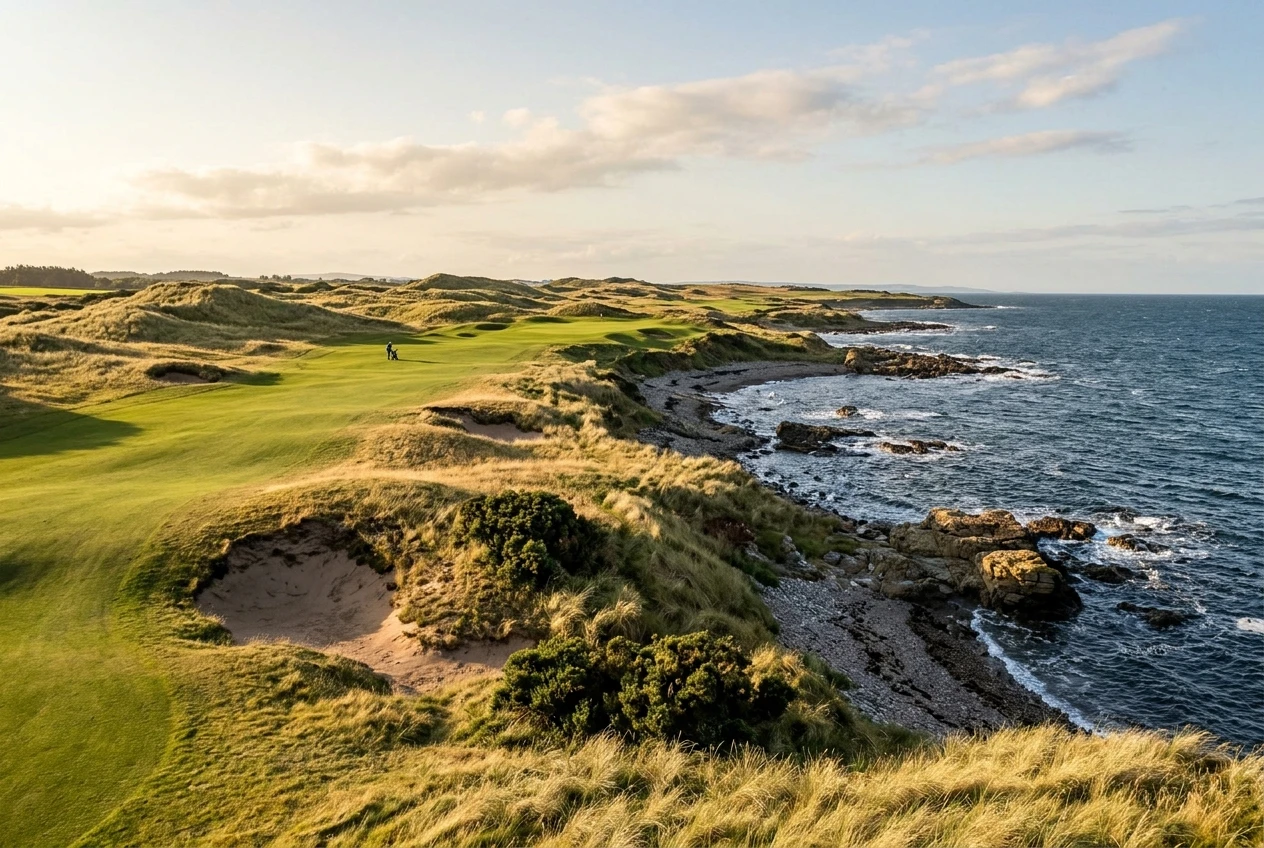
The best golf courses in Fife are spread across a short stretch of coastline, and that is what makes the county work for a week. From the Old Course to the fishing villages of the East Neuk, nearly everything sits within an easy drive of St Andrews. A golfer can play four or five very different links without changing hotels, and the order of those rounds matters more than most itineraries admit.
This guide ranks the main options by the kind of golfer and day each suits: the polished modern links, the old-school members’ clubs, the other St Andrews Links courses and the quieter, cheaper rounds. It then covers how to sequence them, where to base yourself and which tee times to book first.
Why Fife rewards a second and third round more than the first
The Old Course is the reason most people come, and it is worth playing. But a single famous round in a trip is over in about four hours, and the rest of the week needs something to sit beside it. Fife’s strength is variety within a small area. Within one county you can play a links built for the 21st century, a club whose first tee has a periscope, and a municipal-feeling course where nobody is watching the clock.
Those rounds also change how the Old Course feels. Playing it after a few other links, you know how firm fairways run out, how the wind shifts between morning and afternoon and how much a bump-and-run beats a high wedge. You arrive better prepared, and you play it better.
If you do not yet have the Old Course in hand, the plan still holds. Our guide to how to get a tee time at the Old Course covers the routes in, and everything below is built so the week works whether or not you get on.
Kingsbarns and Dumbarnie: the polished modern links for a showpiece day
Kingsbarns, opened in 2000 and designed by Kyle Phillips, is the benchmark for the modern Fife links. It sits on the coast just south of St Andrews, and many of the holes play along the water. The conditioning, the practice facilities and the service all aim at the visiting golfer who wants a full day out rather than a quick round. It suits a golfer who values presentation and wants one showpiece day that feels different from the historic courses.
Dumbarnie Links, designed by Clive Clark and opened in 2020, is the newer alternative on the south Fife coast near Largo. It is a modern design with wide, dune-framed fairways, built for the golfer who wants a playable round with strong scenery. It is a sensible choice if Kingsbarns is full or you want a second modern day in a longer trip.
Both courses reward a relaxed pace, so plan a lunch and some time on the range around the round instead of squeezing in a second activity. Book these early, as they are among the first tee sheets to fill.
Crail and Elie: old-school links with a members’ club welcome
At the eastern end of the coast, the East Neuk offers a different experience. Crail Golfing Society, among the oldest golf clubs in the world, plays at Balcomie Links, a seaside course at the tip of the coast with sea views on most holes. Visitors are welcomed, but the atmosphere is that of a club first and a resort second. It suits a golfer who likes a traditional clubhouse, a straightforward round and some history.
Elie, home of the Golf House Club, is famous for the periscope the starter uses on the first tee to see whether the group ahead has cleared the blind shot over the hill. It is the kind of detail that makes a story afterwards. The links sit in a pretty village with a good beach, and it is a fine pick for a golfer who prefers charm to polish.
Both are best played on days with no strict schedule. Check each club’s visitor arrangements before you commit, since members’ competitions and local rules can change when visitors can book.
The other St Andrews Links courses: where the Castle, Jubilee and New earn a place
St Andrews Links runs seven public courses, and the Old Course is only one. Three of the others deserve a place in a week.
- The New Course was opened in the 1890s and sits next to the Old Course. It is a serious test and a good way to play St Andrews turf without Old Course pressure.
- The Jubilee Course is also on the same ground and is known as a tougher, windier challenge. It suits a stronger player who wants a stern day on a classic piece of links.
- The Castle Course, a modern course designed by David McLay Kidd and opened in 2008, sits on a clifftop east of the town with wide views over the bay. It is the closest St Andrews Links comes to the modern showpiece style.
These courses are also the easiest to book alongside the Old Course, since they share a booking system and a town. A golfer who cannot get on the Old Course can still play St Andrews Links on a good day, and the result is a respectable alternative rather than a consolation.
Lundin, Leven and Scotscraig: the quieter links for a relaxed day
Not every round needs to be a headline. Lundin Links and Leven Links sit close to each other on the south coast, and both have a long history of hosting qualifying events for major tournaments. They are the right choice for a golfer who wants real links golf without a high-profile name, and who is happy to be one of a handful of visiting groups on the course.
Scotscraig, on the Tay estuary near Tayport, is one of the older clubs in the county. It tends to be quieter than the courses nearer St Andrews and works well as a day for catching your breath mid-week.
These are good rounds to place after a demanding day or before a travel day. They are also usually the most economical options in the county, which helps balance a trip that includes a couple of premium rounds. For a wider look at lower-cost links across the country, see our piece on why Scotland’s hidden golf courses are the best value for travellers.
How to sequence a Fife golf week and where to base yourself
Sequence matters because the hardest rounds tire you out and the wind changes what each course asks. A reliable pattern for a five-round week is:
- Start with a relaxed round, such as Lundin, Leven or Scotscraig, to settle into the time zone and the turf.
- Play the showpiece modern day (Kingsbarns or Dumbarnie) when your game is warm but you still have energy for the full experience.
- Place the Old Course in the middle of the week, ideally with a rest or a short round either side. If you are playing it by ballot, keep the days around it flexible.
- Add an old-school club day at Crail or Elie when you want a slower pace.
- Finish with the Castle, New or Jubilee, depending on how the week has gone and how much wind you want.
For a base, St Andrews is the obvious choice. It puts the Old Course, the other St Andrews Links courses and the town’s restaurants within walking distance, and the other courses are a short drive away. The alternative is to split the week and spend two nights in the East Neuk, in villages such as Elie, Crail or Anstruther, which suits golfers who value quiet evenings over a busy town. Splitting adds a hotel change, so it works best on trips of six nights or more.
If the wider trip includes more of Scotland, our guide on how to book a luxury golf trip to Scotland, in the order that works explains how to fit Fife around other regions.
Which tee times and packages to lock in first
Book in order of scarcity, not in order of play. A sensible priority list is:
- The Old Course, by whichever route you are using, because it has the tightest access and everything else can move around it.
- Kingsbarns and Dumbarnie, which sell out earlier in peak months and have less flexibility for walk-up play.
- Crail and Elie, where visitor slots can be limited by club events.
- The Castle, New and Jubilee, which are easier to add once your dates are fixed.
- Lundin, Leven and Scotscraig, which usually have the most flexibility and can fill gaps later.
Accommodation should follow the same logic. Once your key tee times are confirmed, reserve the hotel closest to them. A package that bundles tee times, lodging and transfers can save effort, especially when it includes the harder-to-get rounds, but check what each package guarantees before you pay. Some include set tee times, while others only promise availability.
Timing also changes the picture. Summer evenings give long daylight and the heaviest demand, while spring and autumn are quieter and easier to book. Our month-by-month guide to the best time to play golf in Scotland helps you weigh conditions against crowds.
Ready to build your Fife week? Compare tee time availability and curated Fife golf packages through our booking partners, and start with the round you most want to play.
Related Post