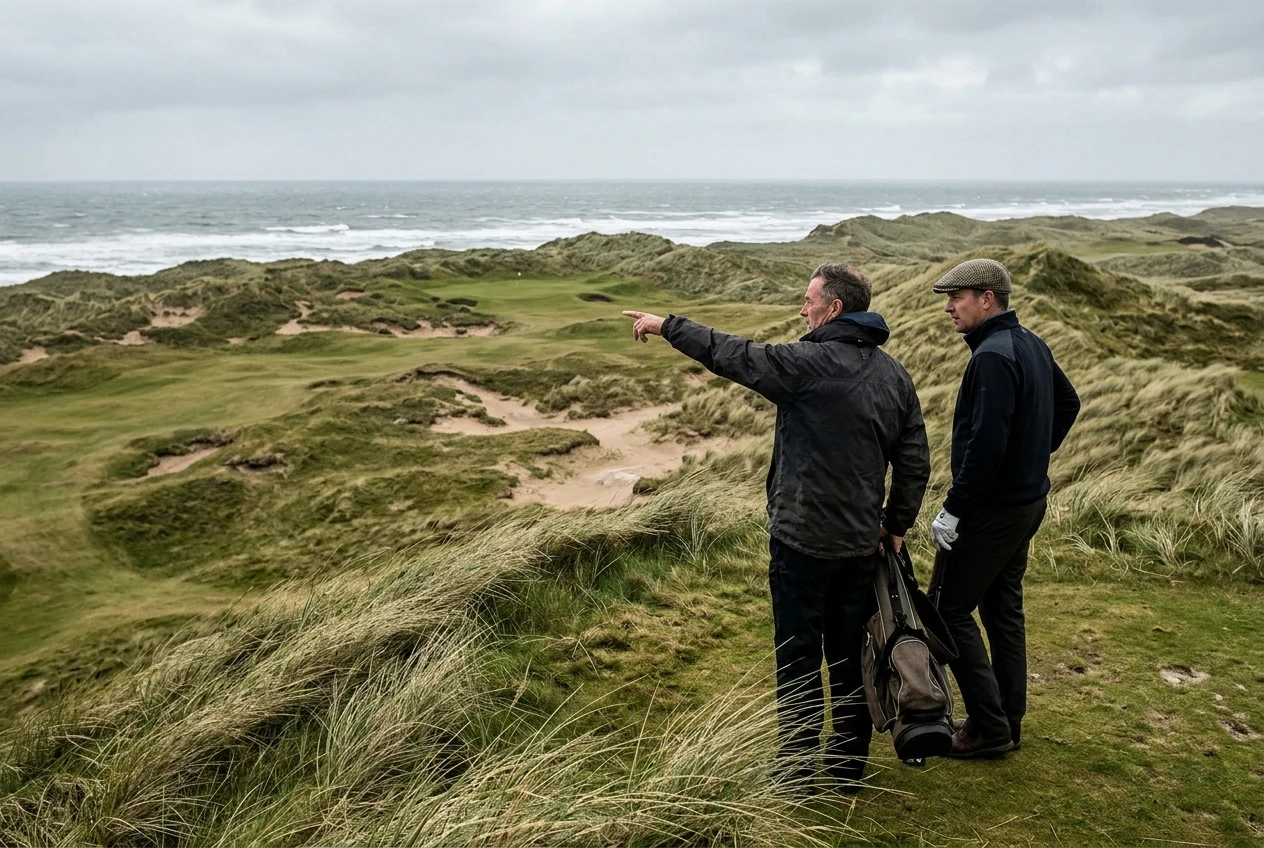
Planning a Multi-Course Golf Trip to Southwest Ireland: Bases, Drive Times and the Order to Book
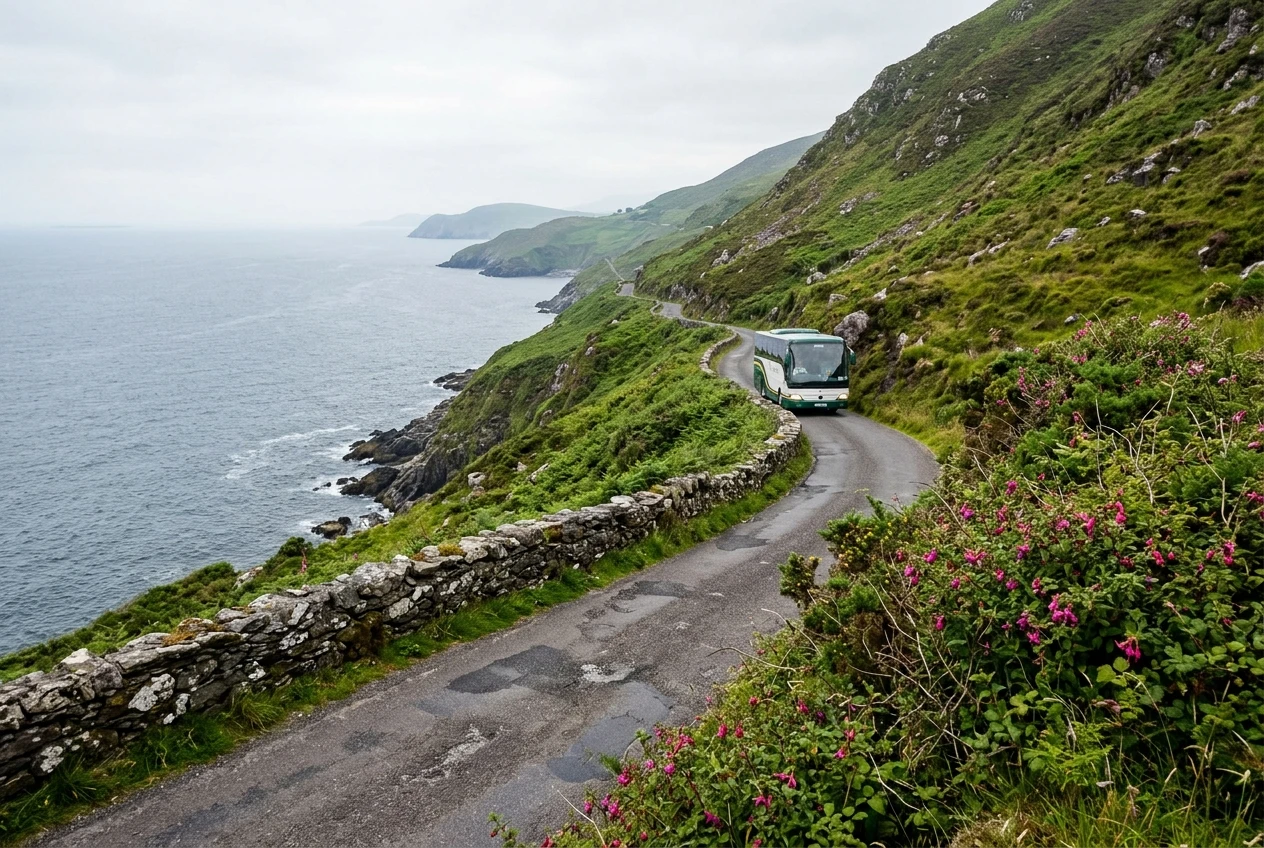
Southwest Ireland spreads its best golf across several peninsulas, and the roads between them are narrow, winding and slower than the map suggests. A trip that links Ballybunion, Waterville and a few of the other Kerry and Cork links works best when you treat it as a stay in one or two places, with each round a short, manageable drive from where you sleep. Southwest Ireland golf trip planning is mostly about sequencing: which bases, which courses, and which bookings to lock in first.
This guide covers the decisions in the order you will have to make them. For a wider look at the whole island, the region-by-region guide to a luxury golf trip to Ireland puts the Southwest alongside the other regions.
Why the Southwest rewards a slower, base-camp style trip
On a map, Kerry and Cork look compact. In practice, the coastal roads follow the peninsulas, so a course that appears close can mean a long drive around a bay or over a mountain pass. In summer, tour coaches on the Ring of Kerry slow things further.
Moving hotel every night costs you the best part of each day to packing, driving and checking in. Staying put for several nights and driving out to the courses lets you unpack once, find a favourite dinner spot, and keep your energy for the golf. It also gives you flexibility when the weather turns, because you can swap a round for a sightseeing day without rebooking a hotel.
Which courses to build around: Ballybunion, Waterville and the supporting cast
Most bucket-list itineraries start with two anchors.
- Ballybunion in north Kerry, home to the Old Course and the Cashen Course. Playing both gives you a good comparison on one site.
- Waterville in the south of the county, out on the Iveragh Peninsula and well away from the main roads.
Around those anchors sits a supporting cast worth choosing from:
- Tralee, an Arnold Palmer design on the Barrow peninsula, makes a natural companion to Ballybunion.
- Dooks, near Glenbeigh on the Ring of Kerry, is a classic links that suits a lighter day.
- Ceann Sibéal on the Dingle Peninsula combines golf with one of the best non-golf destinations in the region.
- Killarney Golf & Fishing Club offers a lakeside, parkland contrast to the links.
- Old Head of Kinsale in Cork sits on a headland and is often treated as a separate trip because of its distance from Waterville.
Decide how many of these you actually want before choosing a base. Two anchors and two supporting courses make a full trip for most groups. Adding Cork usually means a different base, or a second trip.
One base or two? Comparing Killarney, Kenmare, Tralee and Waterville
Each base suits a different mix of courses, so pick based on your anchors.
Killarney has the widest choice of hotels, restaurants and evening entertainment. It sits within reach of Tralee, Dooks and its own courses, and it works as a hub for most of Kerry. Ballybunion and Waterville both mean longer drives from here, so check each leg in a map app before you commit.
Tralee puts you closest to Ballybunion and Tralee Golf Club, with Dingle accessible for a non-golf day. It is a practical base for the northern half of the itinerary, though it offers less atmosphere than the smaller towns.
Kenmare is a small, well-regarded town with good restaurants and upscale places to stay. It sits on the southern side of the Ring of Kerry and suits golfers whose priority is Waterville and a relaxed evening afterwards.
Waterville itself is the obvious choice if the links there is the centrepiece. It is remote, which is its charm and its limitation: you will not find the dining range of Killarney, and other courses are a real drive away.
For a five-night trip, one base usually works. For seven or eight nights, splitting your stay can make sense: a few nights in the Tralee or Ballybunion area, then a few in Kenmare or Waterville. That puts each anchor course a short drive from your bed and removes the longest transfer days. If you want help with the accommodation side, the guide to the best luxury golf resorts in Ireland can help you match a stay to your style of trip.
Getting there: which airport to fly into and how to move between courses
Three airports are worth considering.
- Kerry Airport at Farranfore is closest to most Kerry bases, though flight options are more limited.
- Shannon has more international connections, and the drive south to north Kerry can be shortened by the car ferry across the Shannon estuary between Tarbert and Killimer. Check ferry timings in advance.
- Cork is the natural choice if Old Head of Kinsale or other Cork courses are in your plan, and it connects to Kerry by road.
Dublin works for people combining the Southwest with other regions, but it adds a long cross-country transfer. For a Southwest-only trip, it rarely makes sense.
Whichever airport you choose, plan your transfers by time rather than distance. Add buffer for slow roads, photo stops and the occasional farm vehicle. A tee time at the end of a tight drive adds stress to the first holes, and the first hole of a links is not where you want to be rushed.
How many rounds a day is sensible, and how to pace a 5 to 8 night itinerary
One round a day is the sensible default on links courses. The wind, the walking and the rough make a links round more tiring than the scorecard suggests, and 36 holes in a day over two demanding courses leaves little energy for anything else. If you want a double, make it a lighter course in the afternoon, and avoid stacking two anchor courses together.
A workable shape for a trip of this length:
- 5 nights: three or four rounds, one non-golf day, one arrival or buffer day. One base.
- 6 to 7 nights: four or five rounds, with one or two rest or sightseeing days. One or two bases.
- 8 nights: five or six rounds, with two bases, so neither anchor involves a long transfer.
Put your most important course early in the trip, when weather flexibility is greatest. If rain or gale-force wind disrupts day two, you still have days later to reschedule. Leave one open day near the end for the same reason.
When to book tee times, accommodation and cars, and in what order
The order matters because the most limited resource is the tee time at the best courses. Book in this sequence:
- Tee times at your anchor courses. Ballybunion and Waterville are the hardest to move, so fix those first and build everything around them. Visitor times at well-known links can fill well ahead, so start as soon as your dates are settled.
- Accommodation. Once the tee times are confirmed, book bases near them. Good places in small towns are limited, particularly in peak golf season.
- Supporting tee times. Fit the secondary courses around your confirmed anchors and your base.
- Car and transfers. Book once you know the airport and the bases. Automatic cars are often fewer than manual ones in Ireland, so reserve early if you want one.
- Caddies, dinners and non-golf activities. These can follow, though popular restaurants and any guided tours are worth securing before you arrive.
Flights can go in at step two, once the accommodation dates are firm. Booking them first risks locking in dates that the courses cannot match.
Handling Atlantic weather, caddies and the non-golf days that make the trip
The Atlantic decides the conditions. Wind can change a course’s difficulty from one day to the next, and rain can arrive and pass within an hour. Pack waterproofs, layers and a spare glove or two, and accept that a links round may involve more than one kind of weather. Your flexibility on the schedule is the main protection, which is another reason to keep a buffer day.
A caddie is worth considering at the major links. They read the wind, the lines and the greens, and they make a first visit to a blind-shot course more enjoyable. Ask your tee time provider or the pro shop about arranging one in advance, since availability at busy courses can be limited.
Non-golf days are part of what makes the Southwest worth the journey. Good options include:
- The Dingle Peninsula, with its coastal road and small harbour town.
- Killarney National Park and the lakes.
- A drive around the Ring of Kerry, ideally in a direction and at a time that avoids the coaches.
- Kenmare for a slow lunch and a walk.
A rest day also helps your game on the days that follow.
Package, private driver or self-drive: choosing how to book it
There are three practical ways to arrange the trip, and each suits a different traveller.
Package. A golf travel package bundles tee times, accommodation and often transfers. It suits golfers who want the hard-to-get tee times arranged by people who deal with the courses regularly, and who prefer one point of contact. It saves the most time.
Private driver. A driver removes the stress of narrow roads, left-hand driving and post-round fatigue, and lets everyone enjoy a drink with dinner. It costs more but suits groups who want a premium experience and several courses across a long itinerary. The comparison in private versus group golf tours helps you decide how much of the trip you want arranged for you.
Self-drive. Hiring a car and booking each element yourself gives you the most freedom and often the lowest cost. It works best if you are comfortable on narrow rural roads and willing to do the planning. A single base reduces the driving load considerably.
Whichever route you choose, the sequence above still applies: anchor tee times first, then everything else around them.
To compare Southwest Ireland golf packages and check tee time availability, visit our booking partners and secure your preferred courses and dates early.
Related Post

Best Golf Courses in Scotland for First‑Time Visitors
An easy, friendly guide for golfers planning their first Scottish trip Introduction Planning a golf [...]
Golf Travel Packages For Remote Work Options
There’s something magical about teeing off under a clear blue sky, knowing that your office [...]