
Five Days of Golf in Washington State, From Chambers Bay to Gamble Sands
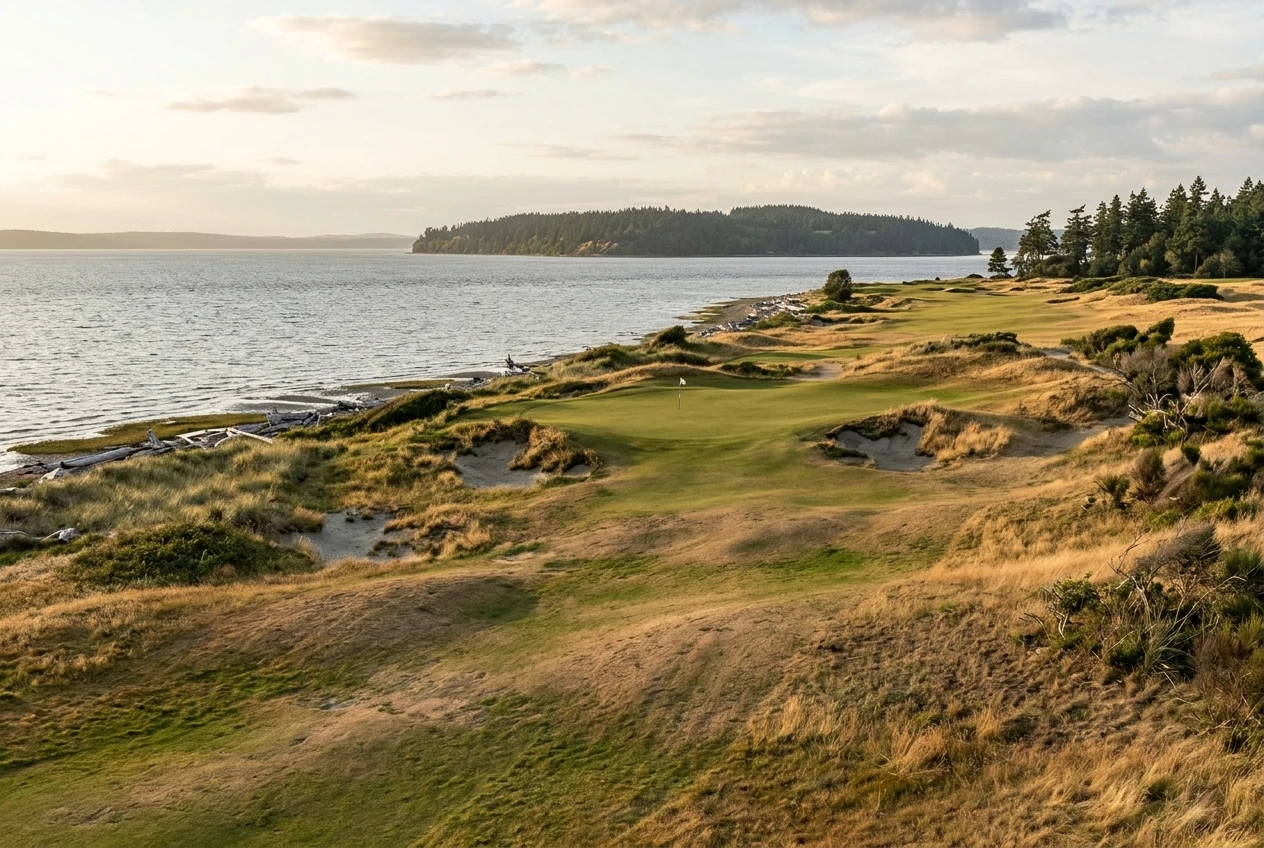
Washington packs three different golf settings into a trip short enough to book in one go. You start on Puget Sound with a links-style course that has hosted a U.S. Open, move to the forested water-and-ferry country of the Kitsap and Olympic side, and finish in the dry hills of Eastern Washington at Gamble Sands. Because you never leave the state, the whole route fits in five days without an internal flight.
This Washington State golf trip itinerary suits golfers who want a few memorable rounds with good dinners and comfortable beds between them, not a marathon of 36-hole days. It works well for couples, for a foursome of friends who prefer to share one well-planned plan, and for anyone who has done a bucket-list trip abroad and wants something closer to home. If you would rather compare several regions before committing, the four-region Pacific Northwest golf pilgrimage covers that. This route covers one state in depth.
Why Washington Suits a Five-Day Golf Trip, and Who It Suits Best
Five days is enough for three rounds, two real dinners and one scenic crossing of the Cascades, and it keeps every drive to a length you can enjoy. The state’s contrasts do the work: salt water and evergreens on the west, open desert and the Columbia River on the east.
The pace suits golfers over 40 who like to play well, eat well and sleep well. Each day below has a single main event, with the stay and the evening planned around it. Nothing asks you to tee off early after a long transfer.
One caution applies to the whole trip. Weather, tee sheets and course conditions change, so treat the courses named here as a starting plan and confirm each one before you commit to the others.
Day One: Arriving in Seattle and Playing Chambers Bay on Puget Sound
Land in Seattle, collect your clubs and head for Chambers Bay, the public course south of the city near Tacoma that hosted the 2015 U.S. Open. It sits on the shore of Puget Sound, with views across the water, and its fescue fairways and sweeping contours give it the look of a links course.
Book an afternoon tee time if you are flying in that morning, and leave a generous buffer for baggage and traffic. If your flight lands late, play the next morning and treat day one as a rest evening.
Check the walking policy and caddie options when you reserve. The course is hilly and the greens are large, so the way you get around it affects how you feel on day two.
For the stay, a Seattle hotel gives you the best choice of dinners and keeps the next day’s logistics simple. Tacoma is a quieter alternative that cuts the drive back after your round. Whichever you choose, aim for an unhurried dinner and an early night.
Day Two: A Second Puget Sound Round and an Evening Worth Dressing For
For round two, look to the Kitsap Peninsula and the Olympic side of the Sound. Gold Mountain in Bremerton and Salish Cliffs near Shelton are two courses worth checking for availability. Pick one that suits the group’s handicaps and the time you have, and ask each course about tee times and current conditions.
If your route includes a ferry crossing, check the sailing schedule the day before and allow extra time. Ferry lines can lengthen at busy times, and a missed sailing can cost an hour you meant to spend on the course.
Return to Seattle for the evening. This is the night to dress for dinner: book a table at a restaurant you have researched, reserve well ahead, and let the group order slowly. A good meal after a day on the course sets up the long drive over the mountains.
Day Three: Crossing the Cascades Toward the Desert
Day three is a travel day, and it is the most scenic of the trip. The road east climbs over the Cascades, and the landscape changes from dense forest to dry slopes and orchards within a few hours.
Treat the crossing as an outing in its own right. A route through Leavenworth, the Bavarian-style town on the east side of the mountains, gives you a lunch stop and a walk to loosen your legs. Wenatchee and Lake Chelan are other natural places to pause on the way north.
Plan to arrive in the Brewster area by late afternoon. Check mountain pass conditions before you set out, especially outside the summer months, because snow and traction rules can affect which routes are open. Keep your clubs secured and your schedule flexible, and do not squeeze a round into the drive unless you are sure of the timing.
Day Four: Gamble Sands and an Unhurried Evening Afterward
Gamble Sands sits above the Columbia River near Brewster. David McLay Kidd designed it, and it opened in 2014. The setting is wide and open, with sandy ground and broad fairways that suit golfers who enjoy creative shot-making. The scenery changes the feel of the round, and the dry air carries the ball differently than it did on Puget Sound, so spend a few minutes on the range first.
Start with a morning round if the tee sheet allows. It leaves the afternoon for a slow lunch, a short walk or time on the terrace. Check whether on-site lodging is available for your dates, since sleeping at the course turns the evening into part of the experience. If rooms are taken, nearby towns offer alternatives.
In the evening, stay put. Eat at the course or nearby, watch the light change over the river and go to bed early. After three days of driving and golf, a quiet night is the right way to end the main part of the trip.
Day Five: A Last Round or a Slow Departure, and How to Choose
How you spend the final day depends on your flight and your energy.
- Play again at Gamble Sands. A second round on the same course lets you apply what you learned on day four. The resort also has a short course, which suits a relaxed final loop.
- Leave early and take your time. If your flight home is the next day, or you want to see more of the Cascades on the return, head west in the morning and stop where you like.
- Break the drive. Leavenworth or another town on the western side makes a good overnight stop if you want to avoid a rush to the airport.
Work backward from your flight. Allow several hours for the drive back to Seattle, add a buffer for traffic and mountain conditions, and give yourself time at the airport. If your flight is early the next morning, plan to sleep near Seattle on the final night. A last round is a pleasure only if it does not risk the trip home.
Getting Between Stops, and When to Hand the Driving to Someone Else
Every leg of this route is drivable, and a rental car gives you the most freedom. It makes the most sense for a couple or a small group comfortable on mountain roads, where one person is happy to drive.
A private driver earns its cost on the longer legs and on evenings when you want to enjoy wine at dinner without planning the ride back. The Cascades crossing on day three is the obvious place to hand over the wheel, since you can look at the scenery and rest. Our guide to choosing between a private driver and a rental car for a Pacific Northwest golf trip walks through the decision leg by leg.
A mixed approach also works. Rent a car for the west side, where distances are short, and book a driver only for the mountain crossing. Whatever you choose, confirm club storage and trunk space for the whole group before you arrive.
Best Time to Go, How to Book Tee Times Early and What to Confirm First
Late spring through early autumn is the usual window for a trip like this, because the mountain passes are clearer and the courses are in their best condition. Summer brings the busiest tee sheets, so plan ahead for those dates. Eastern Washington can be hot in midsummer, so choose early tee times there.
Book in this order:
- Gamble Sands first. It is the most remote stop, and the lodging and tee times may fill earliest.
- Chambers Bay next. It is the headline round for most visitors, so lock in your day and time.
- The second Puget Sound round. You have the most flexibility here, so fit it around the first two.
- Hotels and dinners. Reserve Seattle accommodation and your day-two dinner once the golf is fixed.
Before you pay anything, confirm the following with each course and hotel:
- The booking window and cancellation terms for tee times
- Walking and cart policies, and caddie availability
- Whether lodging is available on site or nearby for your dates
- Current course conditions and any planned maintenance
- Ferry schedules and pass conditions for your travel dates
Check tee time availability and lodging for the dates you have in mind through our booking partners, and build the route above around the courses that are open to you.
Related Post
