
Private Driver or Rental Car for a Pacific Northwest Golf Trip? Decide It Leg by Leg
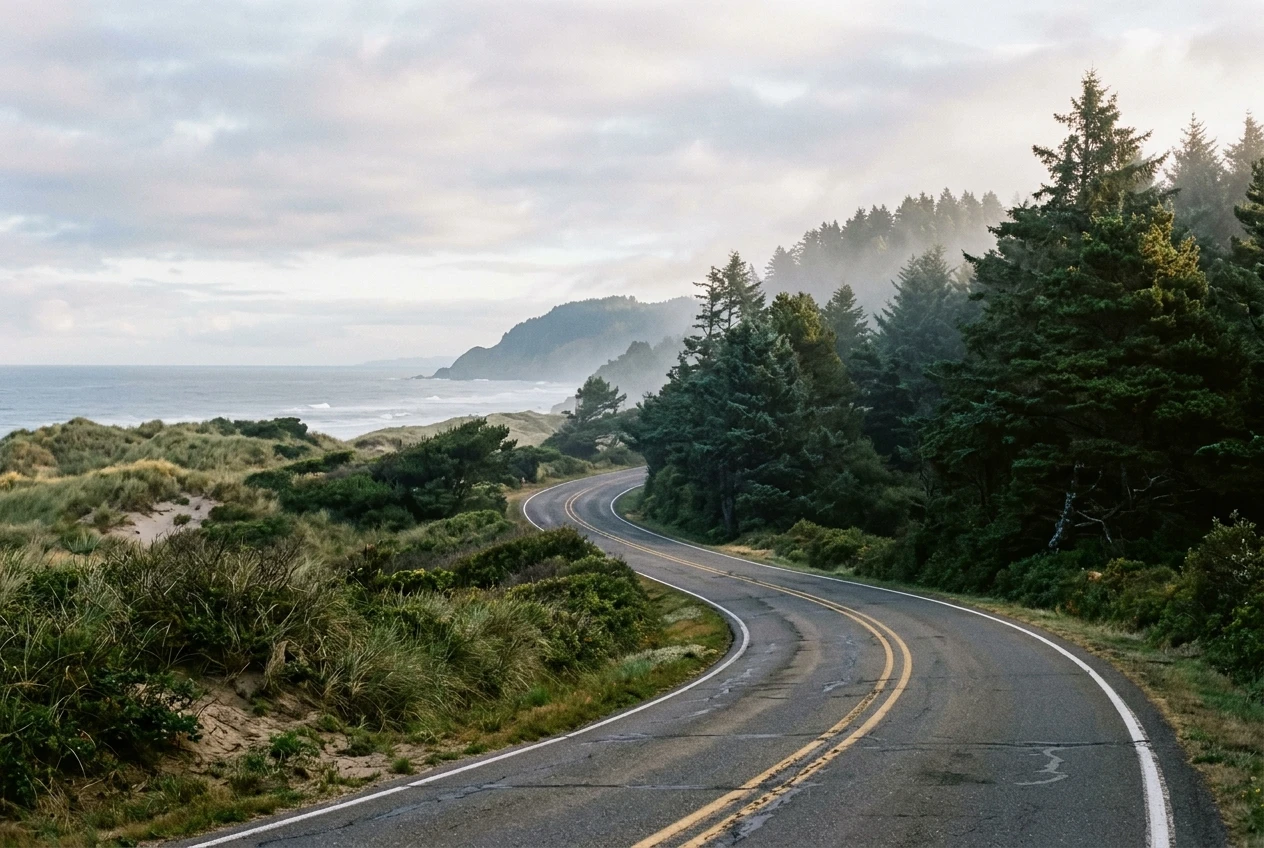
Most golf trip transport advice treats the choice as a single decision: hire a driver or pick up a car. That works in a compact destination. In Oregon and Washington it usually gives you a worse trip than you need to have. The right answer changes between legs, and the private driver vs rental car question for a Pacific Northwest golf trip is better asked once per leg than once per itinerary.
Why the Pacific Northwest doesn’t suit a one-answer transport plan
A multi-stop trip here crosses very different kinds of country. The Oregon coast has courses set among dunes and forest, a long way from the nearest big airport. Central Oregon is high desert, with its own regional airport and resort-based golf. The Puget Sound region is the opposite: a metropolitan area with traffic, ferries and a lot of competing demands on your time.
Each of these asks something different of you as a traveler. On a remote coastal stretch, the road is the main event of the day. In a city, the road is an obstacle between you and dinner. A single plan, either a driver for everything or a car for everything, will be right for one or two of these and awkward for the rest.
Distances between the regions are also long enough that the transfer is a meaningful part of the day, not a footnote. That makes the choice worth making deliberately, leg by leg.
The leg-by-leg test: distance, daylight, luggage and who drives
For each stretch of the trip, ask four questions. The answers will usually point clearly one way.
Distance. How long is the transfer, and is it a road you want to drive or one you just want to be finished with? A long haul after a morning round is a different proposition from a short hop between a hotel and the first tee.
Daylight. Pacific Northwest summer days are long, which gives you room to drive after golf. Shoulder-season and winter days are short, and driving unfamiliar rural roads in the dark, in rain, is a poor way to end a round. Check sunset times for your dates before you decide.
Luggage. Count the golf bags, the suitcases and the people. A couple with two bags and two cases has options a group of four does not.
Who drives. Be honest about whether anyone in the group wants to be at the wheel, and whether they will still want to after eighteen holes and a long lunch. If the evening includes wine, the person who would have driven is no longer an option.
Score each leg against those four. Where two or more point toward a driver, hire one for that leg. Where they point toward the car, rent one for that leg.
Where a private transfer earns its fee
A private transfer is most valuable in three situations.
Remote arrivals. When you land at a smaller regional airport, or fly into a major hub and need to reach a resort a long way off, a driver meeting you at arrivals removes the first real friction of the trip. You skip the rental counter queue, the car-class negotiation and the first hour of unfamiliar navigation, and you start the holiday relaxed.
Long hauls between regions. The big moves between the coast, the desert and the Sound are where a driver changes the day. The scenery is part of the appeal, and a passenger can actually look at it. You can also use the time: replay the round, plan the evening, or rest your back.
Dinner-with-wine evenings. Oregon is wine country, and a premium trip should leave room to enjoy it. A driver for a resort-to-restaurant evening, or for a day that finishes at a tasting room, means nobody has to count glasses. This is the strongest argument for a driver and the one most people undervalue until they are standing outside a restaurant with the car keys.
Where a rental car is the better choice
A rental car earns its place where your plans are loose and your own timing matters.
Flexible stays. If you are based at one resort for several days, a car lets you go where you like without calling anyone: a second course, a lunch in town, a drive along the coast on a rest day. A driver booked by the day for this is possible, but it costs more than the freedom is worth for many travelers.
Scenic detours. Some of the best moments on a trip are unplanned: a viewpoint, a small town with a good bakery, a beach worth walking. A car makes these free. A driver can make them too if you ask, but you are then asking.
Early starts. If you want the first tee time of the day or a quiet range session before the course fills, you control the clock with your own car. You do not need to coordinate a pickup time the night before.
A rental also suits travelers who simply enjoy driving, and some golfers do. On quiet roads with good scenery, it is part of the pleasure. If that describes your group, keep the wheel for those legs.
Group size, golf bags and the quiet maths of splitting the cost
Group size changes the comparison more than most people expect. A private transfer is typically quoted per vehicle, not per person, so confirm that with each provider. Split between four people, a long transfer can cost each golfer far less than it first appears. For a couple, the same transfer is a larger share of the budget.
For a rental car, add the whole cost, not just the daily rate: insurance, fuel, parking, any additional driver fee and, where it applies, a one-way drop-off charge. One-way rentals across a long itinerary are often priced at a premium, so get the final figure before comparing.
Then check the physical fit:
- A group of four with full-size golf bags and suitcases rarely fits in a standard sedan. You may need a large SUV or a van.
- Ask a transfer company what vehicle they will actually send, and whether it takes the number of bags you have.
- Measure up against the rental category, not the car model, since you rarely get a specific model.
A fair comparison puts the total rental cost, divided by the number of travelers, next to the per-person transfer cost for the same leg. Add a value for the evening drink you will not have to skip. The numbers are often closer than you think, and the tiebreaker is usually the quality of the day.
The hybrid itinerary most luxury travelers land on
Most premium trips settle on a mix: a driver for arrivals and the long moves between regions, a rental car where you are staying put and want independence. A sample shape, to show how the logic works:
- Arrival leg: private transfer from the airport to your first stay, so you land and are on your way.
- Coast stay: a transfer in, then a car or resort shuttle for local movement, depending on how many courses you plan to play.
- Move to the high desert: a private transfer for the long leg, so the scenery is yours to enjoy.
- Central Oregon stay: a rental car for flexibility between courses, restaurants and the trailhead you might fancy on a rest day.
- Final leg to the Sound: a private transfer or a car, depending on traffic, ferry timing and how much you want to handle on departure day.
Treat this as a pattern, not a prescription. Your own mix will depend on your dates and group. For a fuller picture of how the regions fit together and which stay suits each, see our four-region Pacific Northwest golf pilgrimage.
The same leg-by-leg thinking applies elsewhere. If you are weighing a trip abroad too, our guide to private transfer or rental car for golf in Portugal shows how the answer shifts by region.
What to confirm before you book
Details decide whether a good plan feels effortless. Before you commit to either option, confirm:
- Pickup points. Where exactly will the driver meet you, and where will you collect the rental? Airport pickups, off-site depots and hotel lobbies all work differently.
- Bag space. Tell the provider how many golf bags and suitcases you have, and get written confirmation that the vehicle suits them.
- Wait times. Ask what happens if a flight is delayed or a round runs late, and whether waiting time is charged.
- Seasonal weather buffers. Coastal rain, fog and, in colder months, conditions on mountain roads can slow a journey. Leave extra time on any leg that precedes a flight or a tee time, and check road conditions before you set out in winter.
- Rental terms. Check one-way fees, mileage limits, insurance cover and who is permitted to drive.
- Cancellation policy. Know the deadline for changing a transfer or car if your tee times move.
A driver who knows the route will often build in sensible buffers. If you are driving yourself, build them in yourself.
Fitting transport around your stays at Bandon Dunes and in Central Oregon
Transport planning works best when you settle your stays first, because where you sleep determines how much you need a vehicle once you arrive.
At Bandon Dunes, the resort setting means much of your daily movement is handled on property, so the question is mostly how you arrive and leave. Our guide to where to stay at Bandon Dunes covers the lodging options, and your choice there will help you decide whether a driver for the in and out legs makes sense.
Central Oregon is more spread out, with golf, dining and outdoor options in several towns. That is where a rental car tends to repay its cost, since you may want to move freely between bases. Our guide to where to base yourself for luxury golf in Central Oregon helps you choose the right town before you decide how to get around it.
Once your stays are set, the transport decisions mostly make themselves: a driver for the long, remote or wine-friendly legs, a car for the stretches where you want to roam.
Compare private transfer options and rental car rates through our booking partners, then lock in your tee times and stays so every leg of the trip is arranged before you fly.
Related Post