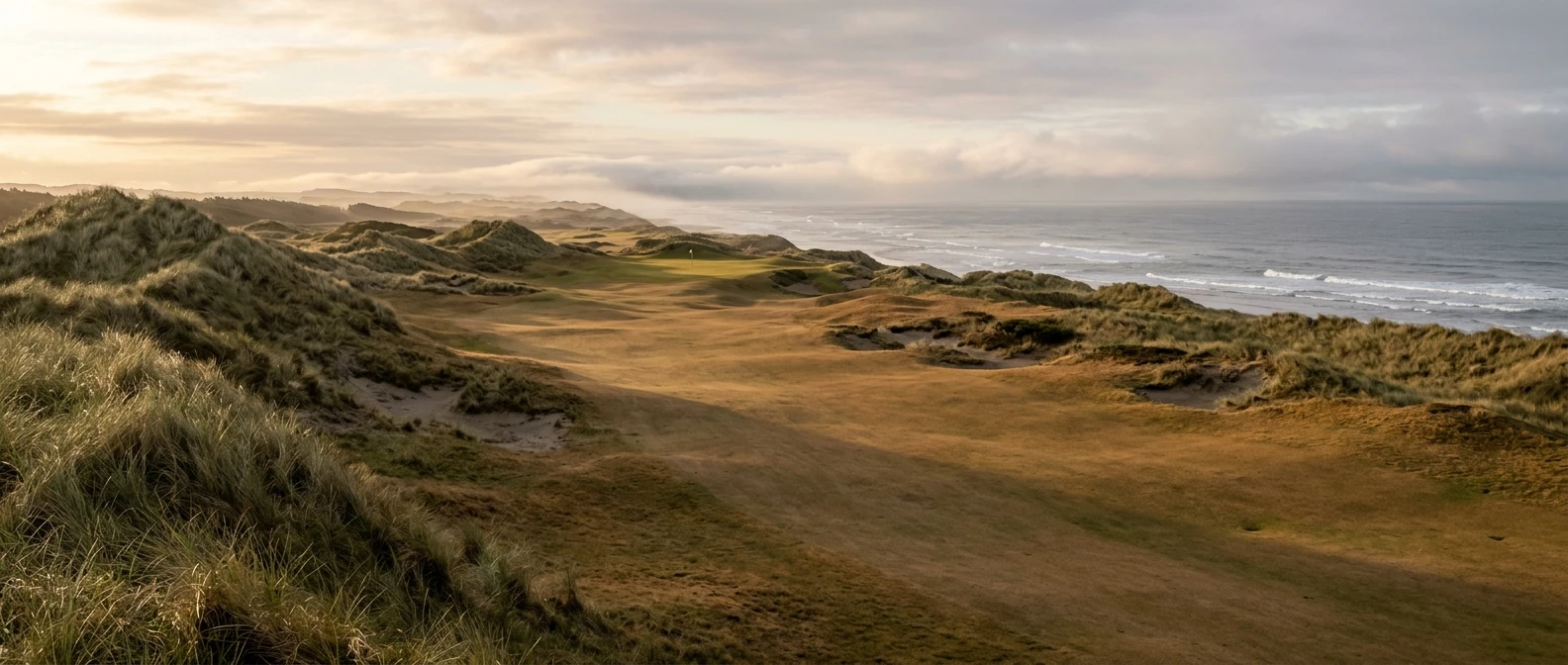
How to Plan a Luxury Golf Trip to Ireland, Region by Region
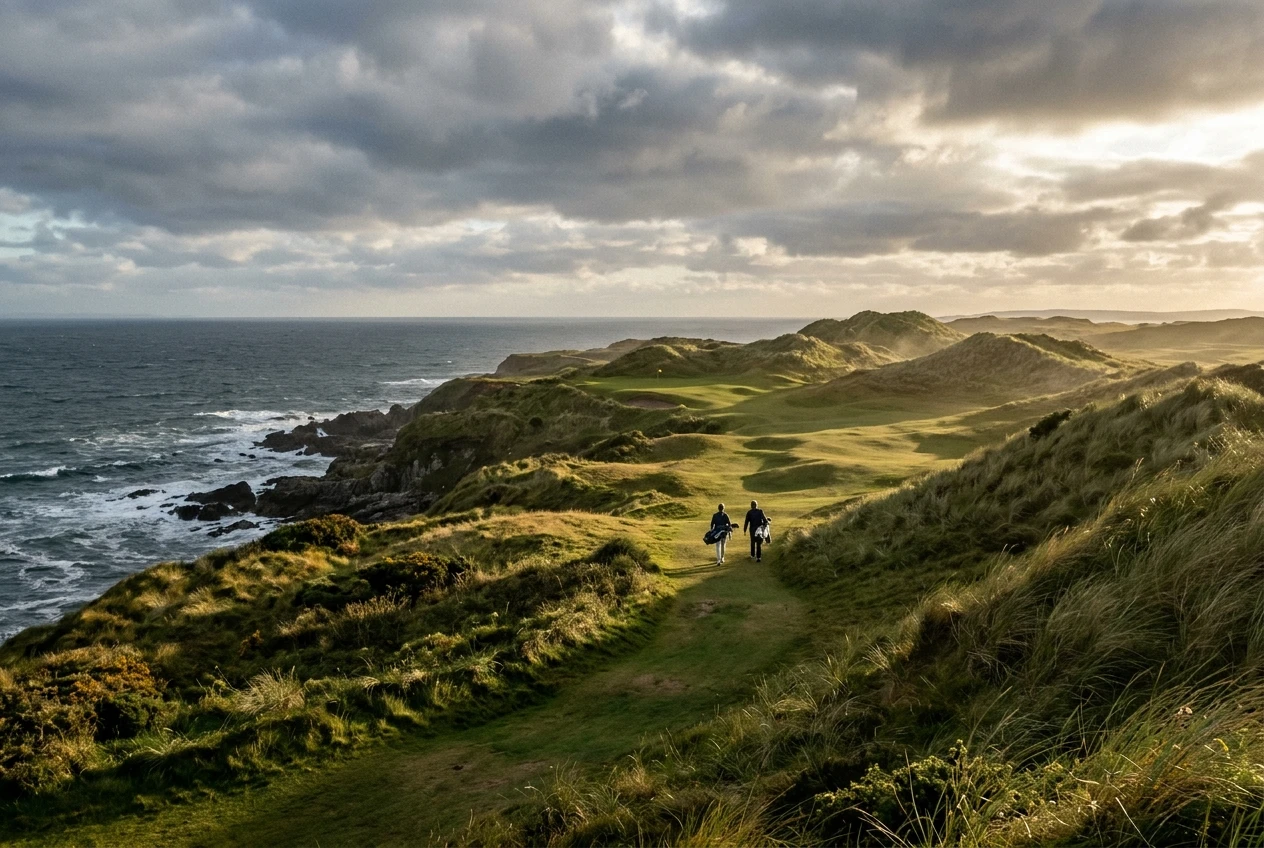
Ireland rewards a golfer who plans around a coastline instead of a checklist of famous names. The best links sit on the edges of the island, the scenery between them is a large part of the trip, and the hotels are some of the most comfortable in golf. This guide works through three decisions in order: which coastline to anchor on, how many rounds suit you, and where to spend on stays and transfers.
Why Ireland suits a luxury golf trip, and how it differs from Scotland
Ireland and Scotland share links golf, but the trips feel different. Scotland’s appeal leans on history and a dense cluster of famous courses within a short drive of each other. Ireland spreads its best golf along the Atlantic and Irish Sea coasts, so geography shapes the trip more. If you have read our guide to booking a luxury golf trip to Scotland, the logic here is similar, but you choose a region before you choose a course.
Ireland is also strong on the rest of the day. Castle hotels, estate resorts and country houses are plentiful, and the welcome in clubhouses and dining rooms is warm and unhurried. Pace and comfort matter as much as the course list.
Two practical points. The island covers two jurisdictions: the Republic of Ireland uses the euro, and Northern Ireland uses the pound sterling. In both, you drive on the left.
Choose your coastline first
Pick one region and play it well. Trying to cover the whole island in a week means long transfers and rushed dinners. Each of the four regions below suits a different golfer.
The southwest
County Kerry and the surrounding coast offer big dunes, ocean views and some of the most dramatic scenery on the island. Ballybunion, Tralee and Waterville are the names most golfers know. This region suits golfers who want the classic Irish links experience and don’t mind a little winding road between courses. Distances here are short on the map but slower than they look, because the roads are narrow and scenic.
The west
Clare and the western seaboard pair links golf such as Lahinch and Doonbeg with easy access to Shannon Airport. Adare Manor, a resort estate in County Limerick, is also within reach, and it is the venue for the 2027 Ryder Cup. This is the most convenient region for a first luxury trip, because arrival is simple and several excellent courses sit within a comfortable drive of one base.
The north
Northern Ireland has Royal Portrush, which hosted the Open in 2019, and Royal County Down, along with other strong links on the Antrim and Down coasts. Donegal, across the border in the Republic, adds courses such as Ballyliffin and Rosapenna. The north suits golfers who want championship-level tests and are happy to base themselves in two places.
Dublin and the east
Portmarnock and Royal Dublin sit near the capital, and The European Club lies down the coast in Wicklow. This region works well for shorter trips, golfers who want city dining and culture alongside their rounds, and anyone who prefers to unpack once and stay put.
If you are undecided, choose by the type of trip you want. Scenery and drama point southwest. Ease and variety point west. Championship pedigree points north, and a city-plus-golf trip points east.
Where to stay: castle hotels, resort estates and boutique country houses
Your stay decides the tone of the trip, so choose it with the same care as your tee times.
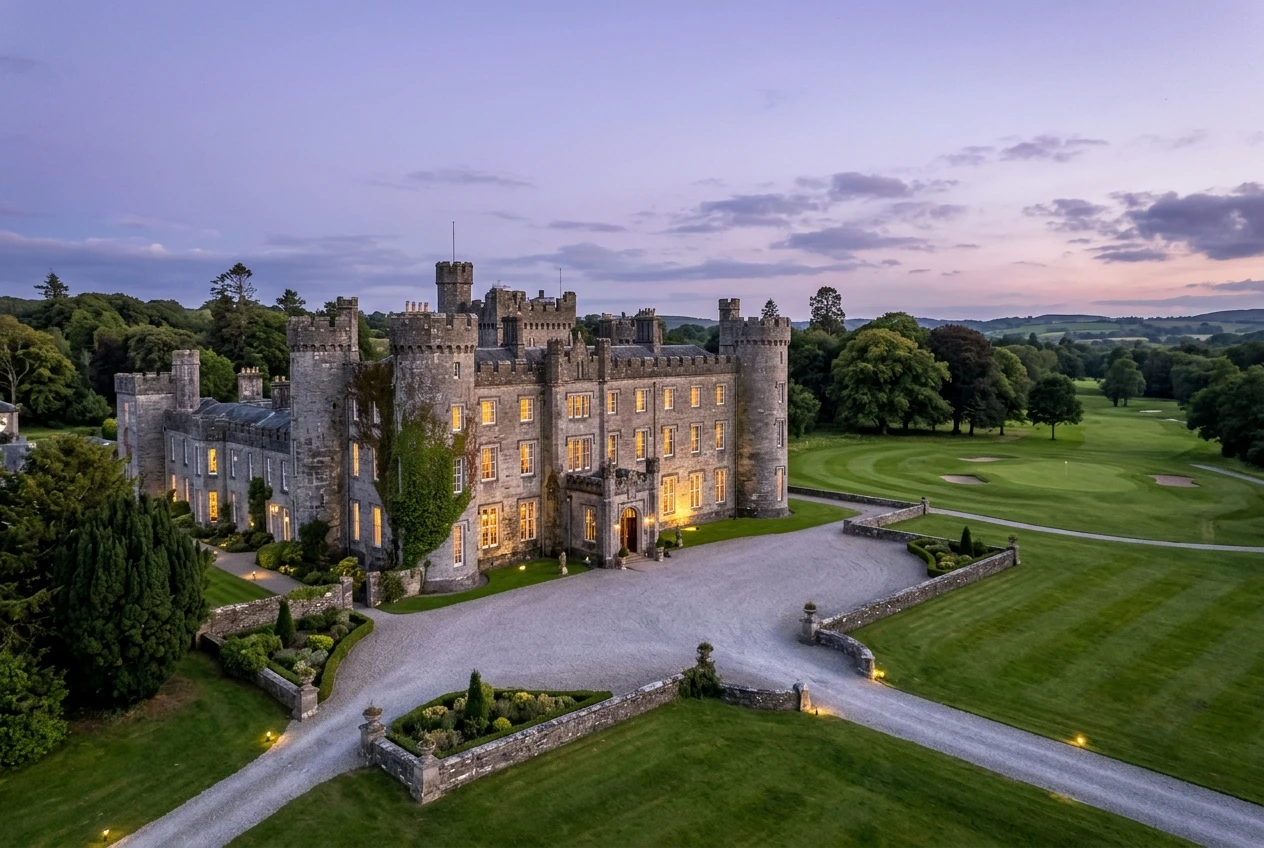
- Castle hotels such as Dromoland in Clare and Ashford Castle in Mayo offer grand surroundings, formal dining and a sense of occasion. They suit anniversaries, milestone birthdays and couples where one partner plays golf and the other wants the estate.
- Resort estates such as Adare Manor combine accommodation, dining and a championship course on one property. You can walk from your room to the first tee, which saves transfers and suits golfers who like a relaxed morning.
- Boutique country houses are smaller and quieter, often with a handful of rooms and a kitchen that cooks from local produce. They suit groups who want a personal feel and don’t need a spa or a ballroom.
Spend most on the place where you will spend the most waking hours. If you plan to play every day and eat out, a well-located country house may serve you better than a grand hotel an hour from the first tee. If rest days and spa time are part of the plan, put the budget into a top-tier estate for two or three nights and keep the other stays simpler.
How many rounds is the right number, and how to pace a week
For most golfers in their 40s, 50s and 60s, one round a day is the right default. Links golf is physical even with a caddie or buggy, because wind, uneven ground and long walks between greens add up. A second round the same day is only enjoyable when you are fresh and the second course is close by.
A sensible week looks like this:
- Arrive and give the first afternoon to rest, a short walk or a practice session instead of a full round.
- Play one 18-hole round on each of the next four or five days, starting with one of your more forgiving courses.
- Schedule at least one day without golf, ideally in the middle of the trip, for sightseeing, a long lunch or a spa.
- Keep the final day light, so a delayed flight or a wet morning doesn’t wreck the trip.
If you want an occasional 36-hole day, plan it deliberately: a short transfer, a long lunch in between and a second round that is a shorter or gentler course. Check each club’s visitor policy as well, since many limit visitor times on certain days.
Weather matters more than most golfers expect. Wind and rain are common on the Irish coast, so keep one round per trip flexible if the itinerary allows.
Getting around: private drivers, self-drive and the transfer decisions that matter
Transfers are where a luxury trip either feels effortless or quietly wears you down. You have three realistic options.
Private driver. A driver handles clubs, luggage and navigation, and lets everyone enjoy a drink with dinner. It costs more than other options, but on the narrow coastal roads of the southwest and Donegal it removes a great deal of stress. It is worth the spend for groups of two to four who want to focus on golf.
Self-drive. A hire car gives you freedom and suits confident drivers comfortable with left-side driving. It works best in the west and east, where main roads are better and distances between courses are manageable. Book a car large enough for golf bags, because compact cars rarely fit them with luggage.
Mixed. Many golfers hire a driver for the longest or most scenic legs and take a taxi or self-drive for short hops between a base and nearby courses. This keeps spending in check while protecting the days that matter.
Whatever you choose, use the same rule: if a transfer is longer than about ninety minutes on the day of a round, consider a driver or split the drive across a rest day.
The best months to go and how far ahead to book tee times
Late spring through early autumn is the usual window for Irish golf, roughly May to September. Days are long in early summer, so an afternoon round can finish well into the evening. Shoulder months can be quieter and sometimes better value, but weather is less predictable, so pack layers either way.
Tee times at the best-known links, and visitor slots at private clubs, fill well ahead of the season. Treat the courses as the scarce item and book them first. For a peak-season trip, start planning as early as you can; ten to twelve months out is a sensible target. Then book the hotel around the confirmed tee times, not the other way round.
Private or group: choosing the format for your party, plus a booking order that works
A private itinerary gives you control over pace, courses and stays, which matters most for couples, family groups and anyone with mixed handicaps or mobility needs. A group tour suits solo travelers or golfers who like company and a ready-made schedule. We compare both formats in detail in our guide on private vs group golf tours.
Whichever you choose, this order tends to work:
- Pick your coastline and travel dates. Everything else depends on these two decisions.
- Secure tee times at the courses you care most about. These are the hardest items to move.
- Book your main stays around those tee times, starting with your signature hotel.
- Arrange flights into the closest airport for your region.
- Confirm transfers, whether a private driver, a hire car or a mix.
- Add dinners, a spa day or sightseeing once the golf and logistics are fixed.
A single package that bundles courses, stays and transfers can save time, particularly for a first trip to a region. If you prefer to build it yourself, follow the same order and confirm each piece in writing.
Ready to turn this route into a real trip? Check tee time availability and compare luxury Ireland golf packages through our booking partners, and start with the coastline that appealed most.
Related Post

Top 10 Golf Courses In Scotland You Must Visit
Scotland’s got a real claim to fame—it’s the birthplace of golf. For any golf enthusiast, [...]