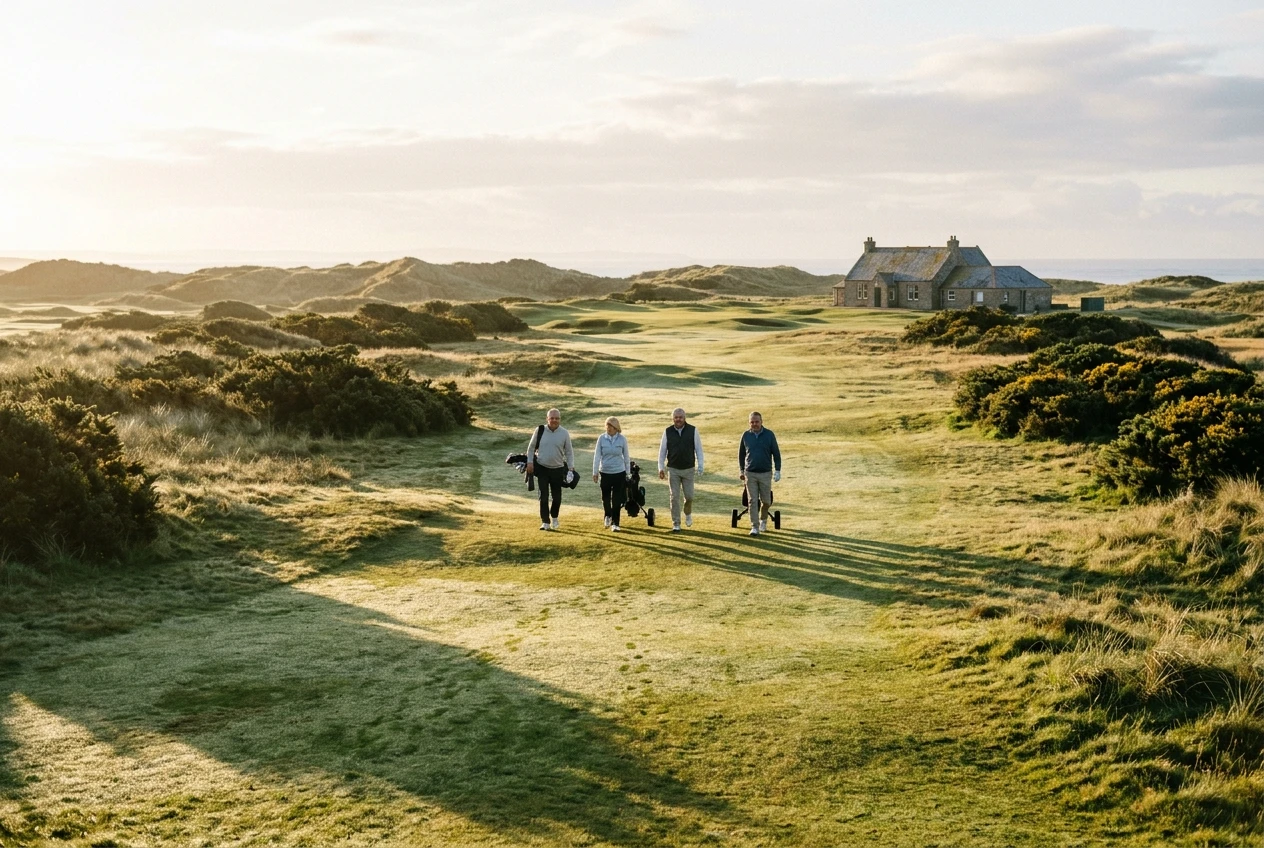
The Algarve Golf Courses That Will Test a Low Handicap Game
The Algarve has plenty of beautiful golf and a smaller number of courses that will make a single-figure player think on every tee. The scenery is similar across most of the region, but the examination is not. Some courses ask for a controlled driver off the tee, some for a stinger into a coastal breeze, and some for a precise wedge to a green where one side is the only safe miss.
This guide looks at the hardest golf courses in the Algarve by the shots they demand, so you can decide where your rounds are best spent.
What Makes an Algarve Course Hard for a Low Handicapper
Length is rarely the problem. A low handicapper who hits it a reasonable distance can reach most Algarve par fours with a mid-iron or wedge in hand. What raises the score is how often a course asks for a specific shot: a draw around a pine, a fade into a shelf green, a low flight under the breeze.
Several features look intimidating and cost you very little:
- Wide fairways framed by dramatic scenery. A cliff or lagoon edge that sits well outside the landing area adds atmosphere, not difficulty.
- Water that is only in play for a poor shot. If a lake needs a significant miss to find, it is a photo opportunity.
- Large bunkers with easy sand. They look fierce, but a good bunker player takes them in stride.
The real tests are narrower corridors, fairways that run firm and fast, greens with severe tiers, and wind that changes the club by two or three numbers. Courses that combine two or three of these in the same round are the ones that deserve a place on a serious itinerary.
The Courses With Championship Pedigree
Professional events show how a course holds up against the best players, and the hosts also tend to be well bunkered and well maintained. Two names stand out.
Victoria, Vilamoura is an Arnold Palmer design that staged the Portugal Masters on the European Tour. Palmer’s courses typically reward a player who can shape the ball both ways and punish a player who cannot, and Victoria follows that pattern with strategic bunkering and greens that ask for a precise approach, not just a generic one. For the tour event the course was set up firmer and tighter than the resort version, so expect a very different feel if you play it under everyday conditions. Even so, the architecture is the same.
Penina, near Portimão was designed by Sir Henry Cotton and hosted the Portuguese Open. It is a flat, mature parkland course with water and trees woven through the routing, and it tests patience more than power. Cotton was a precise iron player, and the course reflects that: placement off the tee and the flight of the approach matter more than carry distance. A low handicapper who relies on length can find it a surprisingly demanding card.
The practical point about pro history is that you will almost never play the championship setup. The tees, pin positions and rough height used for a tour event are not what a visitor gets. Treat the pedigree as evidence of the course’s quality, and choose your tees with that in mind.
Where the Driver Comes Out of the Bag
Some courses ask you to leave the driver in the bag more often than you would like, and that is a strong sign of difficulty for a player who normally attacks.
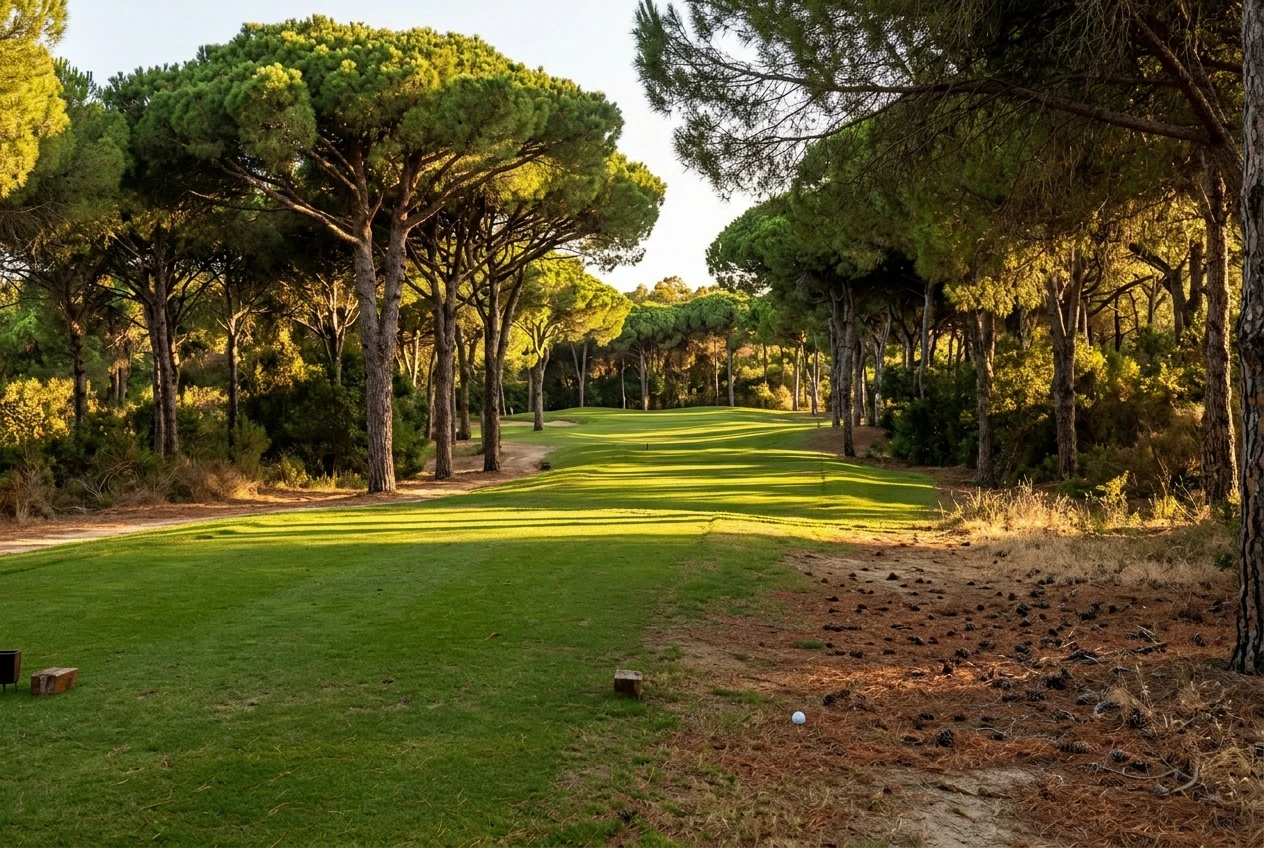
Vilamoura Old Course is the classic pine corridor test. Its fairways are lined with mature trees, and a drive that drifts offline is often blocked from the green with no way to recover except a punch back to the fairway. The line between a comfortable par and a bogey is very thin. A low handicapper who drives it straight will score; one who drives it 15 yards offline will not.
Quinta do Lago is another course where pines and water work together. Fairway width varies from hole to hole, and several holes ask you to choose between a shorter club to find the fairway and a longer club that cuts a corner. The strategic questions are straightforward but constant, which wears on a player over eighteen holes.
Pinheiros Altos, in the same part of the Golden Triangle, also uses a pine-lined routing, and it rewards players who can work the ball in both directions. If your normal shot is a fade, expect at least a few holes where the tee shot wants a draw.
On any of these, count the fairways you hit rather than the total distance. It is the fairway count that separates a good round from a long afternoon.
Wind, Coastal Exposure and Firm Turf
Wind decides scores on the courses closest to the Atlantic and to the Ria Formosa lagoon. The breeze often builds as the day goes on, so the same hole can play a full club longer after lunch than it did at breakfast. Firm summer turf adds to the effect: a ball that lands short of the green can run through, and a crosswind pushes it further.
Palmares, Lagos is the clearest example of a coastal course where exposure shapes the round. Its holes run alongside the sea and the beach, with views that can distract from the number of shots the wind will take from you. Frank Pennink’s design makes use of elevation changes, so you will often play across or into the breeze on consecutive holes.
San Lorenzo, beside the Ria Formosa, brings lagoon edges into play and leaves less room for error when the wind is up. A low handicapper who relies on a high ball flight will find it difficult to hold greens in a stiff breeze.
Monte Rei, a Jack Nicklaus design in the eastern Algarve, sits away from the busiest resort strip and is more open. Nicklaus courses often combine generous landing areas with demanding approach angles, and an open site lets the wind do the rest.
If you can hit a low, controlled iron flight, these are the courses where that shot earns strokes. Pack your punch shots and practise them before you travel.
Greens That Defend the Hole
A green that slopes away from the approach, or one with a run-off collecting to a tight lie, can turn a good iron shot into a difficult up and down. Low handicappers tend to put approaches near the flag on soft greens. On firm Algarve surfaces, with slopes and tiers, that margin disappears.
Look for these features when you research a course:
- Tiered greens, where the wrong tier leaves a long putt over a ridge.
- Run-offs on one or two sides, which turn a slightly long approach into a delicate chip.
- Greens that are elevated or angled, which limit where a ball can safely land.
- Bunkers set at the front corners, which force you to choose between a carry and a miss.
Victoria and Monte Rei both have greens that reward careful play and punish an approach that finishes on the wrong side of the hole. Spend a little time on the practice green before the round to learn the speed, and aim for the safe section of the green rather than the flag when the pin is tucked.
Short game ability is what separates the courses that are hard from the courses that are merely long. A player with a reliable wedge and putter will recover more bogeys here than a player who hits it well but struggles around the green.
How to Build a Three or Four Round Itinerary
An itinerary that escalates in difficulty lets you settle into the turf, the wind and the pace before the hardest tests. One reasonable order for four rounds:
- Penina first, because it rewards placement and patience and lets you adjust to the grass and the speed of the greens.
- Vilamoura Old Course second, where the pine corridors ask for straight driving.
- Quinta do Lago or San Lorenzo third, where water, wind and tighter lines combine.
- Victoria or Monte Rei last, where the design and the greens ask for your full game.
With three rounds, drop the first. Keep the final round for the course you most want to play, so you arrive with your swing in shape and your sense of the conditions sharpened.
Spacing the courses geographically also helps. The Vilamoura and Quinta do Lago courses are close to each other, which keeps the travelling short. Lagos and the western courses require a longer drive, so group them together on one part of the trip.
Booking Notes: Tees, Timing and Pacing
Choose your tees to match the test you want, not your ego. A low handicapper who plays the back tees on a firm, windy course may find the round a grind, while the next set up gives a better balance of challenge and enjoyment. If a course has a championship tee, check the yardage and consider whether the wind that day will make it too much.
Timing matters as well. Early tee times usually bring calmer conditions on exposed courses, and later starts bring the breeze that gives the coastal layouts their teeth. If you want the hardest version of Palmares or San Lorenzo, book an afternoon time. If you want to score, go early.
Pair a tough day with an easier one. A demanding morning on a pine-lined course followed by a relaxed afternoon, or a rest day with a short-game session, keeps your swing fresh for the next round. If you are comparing ways to move between courses, our guide to choosing between a private transfer and a rental car for golf in Portugal covers how to match transport to your group and tee times.
Always confirm current course conditions, tee options and dress codes with the course or your booking partner before you travel, since setups and maintenance schedules change through the year.
Ready to line up your rounds? Check availability and package options for the courses that suit your game through our booking partners, and pair a demanding course with a restful stay. If you want help choosing where to base yourself, our guide to luxury golf in the Algarve covers where to stay and when to go.
Related Post

Golf Travel Packages For Remote Work Options
There’s something magical about teeing off under a clear blue sky, knowing that your office [...]