
A Slow Golf Trip Through Costa de la Luz: Where to Base Yourself, What to Play and How to Spend the Afternoons
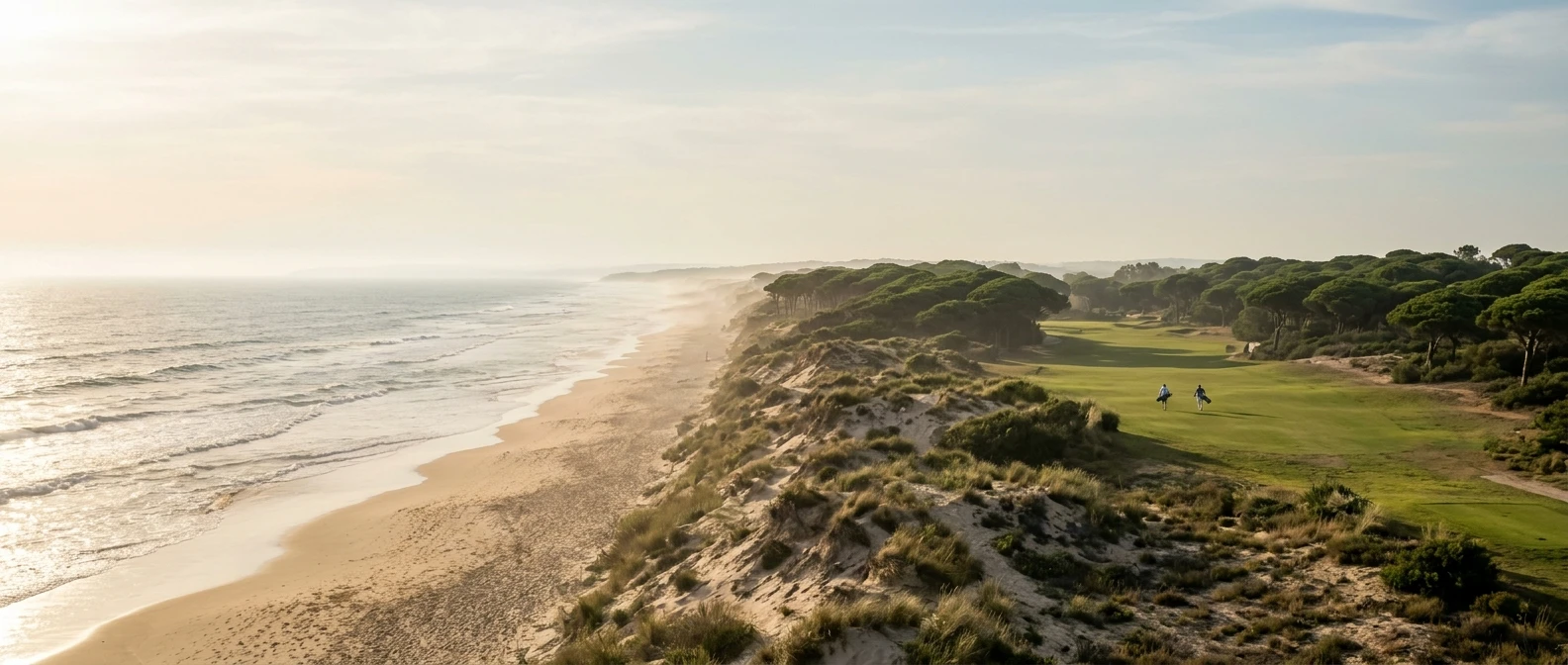
Golf in Costa de la Luz suits a particular kind of trip. The Atlantic coast of Andalusia, running from the bay of Cádiz west and north to the Portuguese border at Huelva, has wide beaches, pine woods, sherry towns and whitewashed hill villages. It also has golf courses where a tee time rarely feels like a queue. The trip works best when you set it up around one round a day and long afternoons, and it works against you if you try to pack in thirty-six holes between flights.
This guide is for golfers who plan a milestone trip and want it to feel generous rather than scheduled. It covers where to base yourself, how to build a list of rounds, what to do between them and how to handle transfers and bookings. A four to six day stay is the length it is written for.
What a Costa de la Luz golf week feels like, and who it suits
The days run at a Spanish pace. Breakfast is late by northern European standards, tee times tend to sit mid-morning, and lunch is the main event of the day. Dinner often starts after nine. Plan the week around that rhythm and it will feel natural. Fight it and you will spend your evenings looking for an open kitchen.
The coast looks different from the Mediterranean side. You get Atlantic light, broad open beaches and breezes that change a round from one day to the next. The towns are working Spanish towns with fish markets, tapas bars and old quarters, and they have not been built around visitors.
This trip suits golfers who:
- Value atmosphere and food as much as the scorecard
- Want to play one round a day and enjoy the rest of it
- Are travelling as a couple or a small group of friends, some of whom may not play every day
- Prefer a quieter destination to the busiest golf corridors in Europe
It suits less well anyone whose idea of a golf trip is a different famous course every day, or who needs a long list of championship names to justify the journey. The courses here are good, and the destination is the larger part of the appeal.
Choosing your base: Cádiz coast or Huelva side
The coast divides naturally into two areas. Pick one as your base, because moving hotels halfway through a short trip eats a whole afternoon.
The Cádiz coast
The area around Chiclana, Conil and Vejer, together with the Jerez and El Puerto de Santa María side of the bay, gives you the most variety. Beach resorts, historic cities, sherry country and white villages all sit within a manageable drive of each other. A base near Sancti Petri or La Barrosa puts you close to the beach and to several courses. A base in or near El Puerto de Santa María or Jerez puts you inside the sherry triangle and the old towns.
This side suits couples and mixed groups where not everyone plays every day, because the non-golfers have plenty to do within easy reach.
The Huelva side
West of Seville, the Huelva coast is flatter, quieter and greener, with pine woods behind long beaches. Islantilla, El Rompido and the area around Ayamonte are the usual golf bases. The pace is slower still, and the Portuguese border is close, so you can combine it with a few days in the eastern Algarve.
This side suits golfers who want the least crowded version of the trip, and those who plan to continue into Portugal afterwards.
If you have only four days, choose the Cádiz coast for the range of things to do. If you have six and want stillness, the Huelva side rewards the extra time.
The coastal and countryside courses worth building a round list around
Build a list of three to five rounds and leave the remaining days open. Check each course’s current layout, conditions and access for visitors before you commit, since resort and club arrangements change. These are the names that come up most often for this coast.
Novo Sancti Petri (Cádiz coast). A Seve Ballesteros design near the La Barrosa beach, in the pine and coastal landscape south of Chiclana. It is a natural anchor for a base around Sancti Petri, and a good candidate for a first round while you settle in.
Costa Ballena (near Rota). Home to the Ocean Dunes course, an Arnold Palmer design on the northern side of the bay of Cádiz. It suits a day when you are staying around El Puerto de Santa María or Jerez.
Montecastillo (near Jerez). A Jack Nicklaus design set in the countryside rather than on the coast. It makes a good contrast to the seaside rounds and fits neatly with a sherry bodega afternoon.
Islantilla (Huelva coast). A pine-lined resort golf setting close to the beach, and a natural base course for the Huelva side.
Isla Canela, Bellavista and El Rompido (Huelva side). Several more courses within reach of the Huelva coast, useful for filling a week without driving far.
A sensible mix is one or two seaside rounds, one countryside round and one flexible day you can fill depending on weather, wind and energy. On the Cádiz coast the easterly wind, known as the levante, can blow hard. If the forecast is rough, swap the exposed course for a more sheltered one and move the beach day to a calmer afternoon.
Setting a rhythm: one round a day and the afternoons you will actually want
The structure that works is simple. Play in the morning, have a long lunch, and leave the afternoon open. Request a mid-morning tee time rather than the first slot, so you can have a proper breakfast and avoid rushing the drive. In the warmer months a morning start also keeps you out of the midday heat.
A sample four-day shape looks like this:
- Day one: arrive, settle in, take an easy walk on the beach or through the old town. No golf, or at most a practice session.
- Day two: first round, lunch at the club or a nearby beach restaurant, a free afternoon.
- Day three: a second round at a different course, then an afternoon excursion.
- Day four: a final round or a rest day, depending on how the legs feel, then a long final dinner.
With six days, add a rest day with no golf in the middle and a third or fourth round near the end. Rest days matter more than most golfers expect, particularly for anyone walking rather than using a buggy.
Sherry bodegas, seafood and white villages between rounds
The afternoons are where this coast separates itself from a purely golf-focused destination.
Sherry country. The towns of Jerez de la Frontera, El Puerto de Santa María and Sanlúcar de Barrameda form the traditional sherry triangle. Sanlúcar is known for manzanilla, a dry sherry matured near the sea. Many bodegas offer tours and tastings, and booking ahead is sensible, particularly for English-language visits. A bodega visit sits well after a morning round at Montecastillo or on the bay of Cádiz.
Seafood. Fried fish, prawns and tuna are staples along the coast. Bluefin tuna from the Barbate area is a regional specialty, and spring is when it is most associated with local menus. On the Huelva side, prawns and the cured ham associated with the Sierra de Aracena are the names to look for. Lunch at a beachside restaurant, ordering plates to share, is one of the better ways to spend two hours.
White villages. Vejer de la Frontera and Arcos de la Frontera are the two most visited hill towns near the Cádiz coast. Both are good for a late-afternoon walk, a view and an early evening drink before dinner. Plan them for the day after a round, not the same afternoon, so you are not climbing cobbled streets when tired.
Cádiz city. The old town sits on a narrow peninsula, with a cathedral, markets and the sea on three sides. It is a good half-day outing for a rest day.
Doñana. For the Huelva side, Doñana National Park offers wildlife and wetland landscapes, with guided visits available. Check access and booking requirements in advance.
Getting around: airports, transfers and tee time timing
Three airports cover most plans:
- Jerez (XRY): closest to the Cádiz coast and the sherry towns, though routes are more limited.
- Seville (SVQ): a larger airport with more flight options, workable for both the Cádiz coast and the Huelva side, with a drive of around an hour or more depending on where you stay.
- Faro (FAO): in Portugal, but the practical choice for the western Huelva coast near Ayamonte, and for anyone combining the trip with the Algarve.
Confirm drive times for your exact base and route before you book flights, since they vary with traffic and season.
For getting around, a private transfer is the easier option if you plan to enjoy wine at lunch and want to arrive relaxed. A rental car gives more freedom for village excursions and for varying the round list. Many groups use a transfer from the airport and a car for the rest of the stay, or the reverse. Whichever you choose, leave a margin of at least thirty minutes between your planned arrival and your tee time, and ask each course how early you need to be there.
Check tee time rules for each course. Some resort courses prioritise guests staying on property, and some clubs require handicap certificates or restrict visitor times. Ask early, in writing, so there are no surprises on the first tee.
Pairing Costa de la Luz with the Algarve or the Costa del Sol
Costa de la Luz works as a standalone week, and it also combines well with its neighbours.
If you are weighing it against the more developed Mediterranean coast, the guide to choosing between the Costa del Sol and Costa de la Luz for a golf trip sets out how the two compare for golfers over 40. The short version is that the Costa del Sol offers more courses and more resort infrastructure, while the Atlantic coast offers a calmer, less crowded week.
The Huelva side connects naturally to Portugal. The border at Ayamonte puts the eastern Algarve within a short drive, so a trip can begin with a few days of quiet Spanish golf and finish with polished resort rounds. For that second half, see luxury golf in the Algarve and where to stay and play. Flying in or out of Faro makes this the simplest two-country plan.
How to book tee times and stays so the trip stays effortless
Book in this order, and the rest of the trip falls into place:
- Fix your dates and base. Decide on the Cádiz coast or the Huelva side first, because everything else follows from it.
- Book flights and your accommodation. Choose a hotel or resort within easy reach of at least two courses.
- Request tee times. Ask for mid-morning slots, and confirm whether the course offers guest priority, buggy hire, caddie or trolley options and visitor requirements.
- Arrange transfers or a rental car. Match the choice to your group size and how much you want to explore.
- Book the extras. Reserve bodega visits, popular restaurants and any guided excursions after your tee times are confirmed.
A golf package from a booking partner can bundle accommodation and rounds, which saves coordination, particularly for groups. Compare what is included, such as buggy fees, transfers and breakfast, so you can see what you are paying for. If you prefer to book separately, tee time platforms let you compare available slots across several courses at once.
Whichever route you choose, keep one afternoon unplanned. It is usually the afternoon people remember.
Ready to shape your own Costa de la Luz trip? Check current availability for golf packages and tee times through our booking partners, and build the week around the pace you want.
Related Post