
How to Choose Among Scotland Golf Tours When You’re Planning Your First Bucket-List Trip
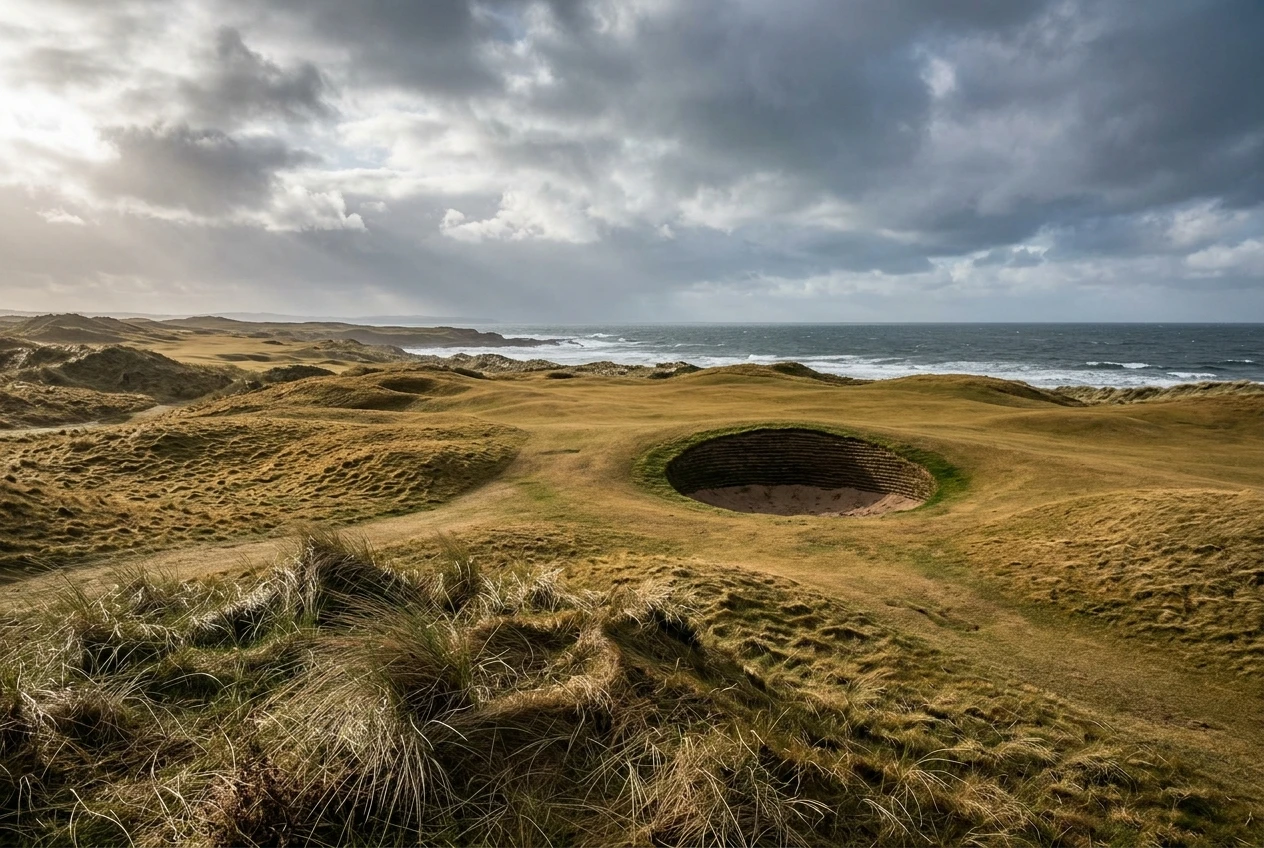
Scotland has a claim to being where golf started, and the game’s oldest courses are still open to visitors who book ahead. Planning that first trip is a different job from playing it. The country offers hundreds of courses across several regions, and the routes between them are longer than a map suggests. The best-known tee times fill early, and the sensible way to plan depends on how much you want to handle yourself.
This guide follows the order a planner runs into the decisions. It starts with what makes Scotland different, then the main choice (package, custom or self-planned), then distances, where to stay, the Old Course, handicaps, and how to judge a package. It ends with a way to decide whether the trip is worth it for you.
Is Scotland good for golf, and what makes a trip there feel different?
Yes, and the reason is the type of golf. Much of the country’s best-known golf is links golf, played on sandy coastal land shaped by wind and weather rather than by earth-moving equipment. Fairways are firm and often undulating. Bunkers are deep and sometimes revetted with stacked turf. Greens are approached along the ground as often as through the air. A shot that would be routine on an inland course becomes a decision about wind, bounce and where to miss.
The trip feels different from a resort week in other ways too:
- The courses are woven into towns. At St Andrews, North Berwick and Troon, you walk from a pub or hotel to the first tee. There is little of the gated, car-ride-to-the-clubhouse feel.
- Walking is the norm. Many visitors walk with a caddie or a trolley, and the pace of the day follows from that.
- The weather changes within a round. Sun, rain and wind can all arrive in the same afternoon. A good waterproof jacket and trousers matter more than any club in the bag.
- Clubs welcome visitors, with conventions. Dress codes exist at many clubhouses, but the mood is friendly. You can have a premium trip here without any stiffness.
Daylight is part of the appeal in summer, when evenings run long and a late tee time is realistic. The main golf season is generally late spring through early autumn, and that window is when tee times and rooms are hardest to get. Planning months ahead is normal.
Package, custom or self-planned: how to plan a Scotland golf trip around the tour style that suits you
Most Scotland golf tours fall into one of three styles. The right one depends less on budget than on how much of the planning you want to do and how fixed your must-play list is.
Packaged tours
A packaged tour is a set itinerary sold at a set price, usually covering lodging, a number of rounds, some meals and transfers. The operator secures the tee times, and you have one point of contact.
This suits first-timers, couples or small groups who do not want to compare thirty hotels, and anyone who finds the logistics of driving on the left a poor use of vacation energy. The trade-off is flexibility. The courses, order and hotels are mostly chosen for you, so check that the itinerary matches what you want rather than what the operator had available.
Custom itineraries
In a custom trip, a specialist builds the route around your dates, group size, preferred courses and comfort level. This is the option most often described as concierge service, and it fits the premium, unhurried trip many golfers over 40 are after.
It works well when you have a short list of courses you must play, a mix of golfers and non-golfers, or particular requirements such as limited walking, specific room types or a dinner plan for each evening. It costs more than a standard package because someone is doing the work for you. In return, you can specify the pace, and you get a person who knows the region.
Self-planned trips
Booking everything yourself gives you full control and lets you pick each course and room individually. It can also avoid an operator’s margin, though it costs hours of research and carries more risk. You hold the responsibility if a tee time is missed or a booking falls through.
Self-planning works best if you are comfortable driving on narrow roads on the left, you are flexible on which famous courses you play, and you are happy to book months ahead. It works less well if your priority is a specific marquee tee time on a specific day.
Questions that point to a style
- How many rounds do you want, and how many are non-negotiable? A long must-play list favors a custom or packaged approach, because access is the hard part.
- How many people are travelling? Groups of four or eight are easier for operators to place and often easier to price.
- Do you want to drive? If not, you need either a package with transfers or a private driver. The member’s guide on choosing between a driver and a rental car for St Andrews goes through that decision in detail.
- How much time do you have to plan? A trip booked with five months of lead time and a free evening each week is very different from one booked in a rush.
If you cannot decide, a custom itinerary quote costs nothing to request and will show you what the details of a trip actually look like. You can then judge whether to buy it, adapt it or book it yourself.
How far apart Scotland’s golf courses are, and how that shapes your route
Scotland looks small on a map, but a day of golf and a day of travel do not combine well. Roads are often single carriageway, towns slow you down, and the best courses sit at the edges of the country. Treat any drive time as approximate and check it with your operator or a mapping tool for the day you travel.
Most trips cluster courses into regions:
- St Andrews and Fife. A concentration of links within a short drive of each other, and the most popular first-trip base. It is roughly an hour or so by road from Edinburgh airport, depending on traffic.
- East Lothian. North Berwick, Gullane and neighboring links sit along the coast east of Edinburgh, a short drive from the capital. It combines easily with Fife.
- Ayrshire and the west coast. Troon, Prestwick and Turnberry are on the Firth of Clyde, a drive from Glasgow. This region fits a separate leg rather than a day trip from Fife.
- The Highlands. Dornoch, Nairn and Castle Stuart are around Inverness. They reward the extra travel with quieter golf, but adding them means more time on the road.
- The northeast. Aberdeen’s coast has its own set of well-regarded links, farther again from the central belt.
Two practical rules help. First, pick one or two regions for a first trip and play them properly rather than racing between all five. Second, limit travel on days you play. A long drive after a round on a windy links is tiring, and a morning tee time after a long transfer is worse.
A sample shape for a first trip is a few nights in St Andrews and Fife, then a few nights in East Lothian or Ayrshire. The courses around St Andrews are covered in the member’s piece on the Fife links worth playing around the Old Course, including the order to play them.
Rest days are worth building in. Eighteen holes on a links, walking, in wind, is a lot, and a bucket-list trip is better with one lighter day than with a series of grinding ones. Playing 36 holes in a day is possible, but it is a choice, not a requirement.
Where to stay golfing in Scotland, and how to pick a base
The main decision is whether to move hotels or stay put. Changing hotels every night eats time you could spend on the course or at dinner. Staying in one base for several nights and driving out for rounds is usually easier, as long as the courses you want are within a reasonable drive.
Common choices:
- A town base. St Andrews is the obvious one: restaurants, pubs, shops and several courses are within walking or short taxi distance. North Berwick and Troon work the same way on a smaller scale. A town suits couples where one person plays more than the other.
- A resort base. Some of Scotland’s most famous hotels sit beside a course, such as the Old Course Hotel in St Andrews, and offer spa, dining and on-site golf. This is the closest to a traditional luxury resort week.
- A country house or boutique hotel. Often a short drive from the courses, these offer quiet and good food, but you will rely on a car or driver.
When choosing, check these:
- Distance to tee times. Find out how far each hotel is from the courses you have booked, and whether a shuttle or taxi is realistic at early hours.
- Rooms for the group. Confirm bed configurations, particularly if you are traveling with friends rather than a partner.
- Dining. Smaller towns may have limited restaurant choice, and popular places book up in high season.
- Cancellation terms. Weather rarely cancels golf, but travel plans do change, so understand the rules before you pay.
If non-golfing companions are coming, a town base gives them somewhere to spend the day. The member’s piece on a couple’s golf trip to St Andrews covers dining and the hours between rounds.
How to book the Old Course at St Andrews
For many first-time visitors, the Old Course is the reason for the trip, and it is also the hardest tee time in the country to secure. There are three main routes, and most golfers use a combination.
- The daily ballot. The St Andrews Links Trust runs a ballot for tee times two days ahead. You enter by a stated deadline, and results are published afterward. It is free and gives you a chance, but not a guarantee, so do not build the trip around it alone.
- Advance reservations. The Links Trust takes advance bookings for the Old Course within certain windows, typically well before the season. Availability and rules change, so check the Trust’s current process directly.
- Packages and operators. Many tour operators and hotels hold access to Old Course tee times as part of a package. For a lot of golfers this is the most reliable route, because the tee time is confirmed before you pay for flights.
The Old Course has traditionally been closed to play on Sundays, so plan the rest of your week around that rather than assuming a weekend slot.
Because dates matter so much, many golfers fix the Old Course tee time first and plan everything else around it. The full process, including how to choose accommodation around it, is in the member’s guide on how to get on the Old Course and where to stay when you do.
Do you need a handicap to play in Scotland?
For the Old Course, yes. The St Andrews Links Trust asks visitors for a handicap certificate and publishes maximum handicap limits, which have been 24 for men and 36 for women. Confirm the current figures with the Trust before you book, since policies can change.
Elsewhere the answer varies by club. Many of the better-known links and private clubs ask for proof of a current handicap, and some set their own limits. Others are more relaxed, particularly on public or shorter courses.
To stay ahead of this:
- Get your proof early. Ask your home club for an official handicap certificate or a current handicap index. A screenshot may not be enough, so ask each course what it accepts.
- Carry it with you. Keep a printed or digital copy for the starter’s desk.
- If you do not have a handicap, contact each course or your operator before booking. Some courses will make arrangements, and others will point you to alternatives.
A handicap is also useful for choosing tees and judging how a course will play. Links courses punish wayward shots with deep bunkers and thick rough, and playing from the correct tees makes a round more enjoyable. Higher-handicap golfers should not feel excluded: ask for tees that suit your length, play a pace that keeps the group moving, and pick up your ball when a hole is going badly. Local etiquette values pace over pride.
What to look for in Scotland golf tour packages
Packages differ more than their brochures suggest. Two trips at similar prices can include very different things. When you compare, look for these:
- Named courses and confirmed tee times. A package that promises “a round at a championship links” is vaguer than one listing the course and time slot. Ask what is confirmed in writing and what is subject to availability.
- What the price includes. Check green fees, accommodation category, breakfast, transfers, caddies, and any lunches or dinners. Items that are optional extras can change the real cost.
- Group size and pacing. Some packages put you with a larger group on a fixed schedule. Others are private. Choose according to how you like to travel.
- Local support. Find out who you contact if a flight is delayed or a tee time changes, and whether they are in Scotland or in another time zone.
- Access to hard-to-get tee times. If the Old Course or a private club is on your list, ask directly how the operator secures that access.
- Cancellation and change terms. Look at what happens if you cancel, if someone in your group drops out, or if the course is closed.
- Transparent pricing. A good operator can break down what you are paying for. If they cannot, treat it as a warning.
A brochure can sound premium while giving you little service in practice, and the real test is how the operator handles detail. The member’s guide to St Andrews golf package providers and how to tell real concierge service from a brochure lays out how to make that judgment, and the same questions apply to a country-wide itinerary.
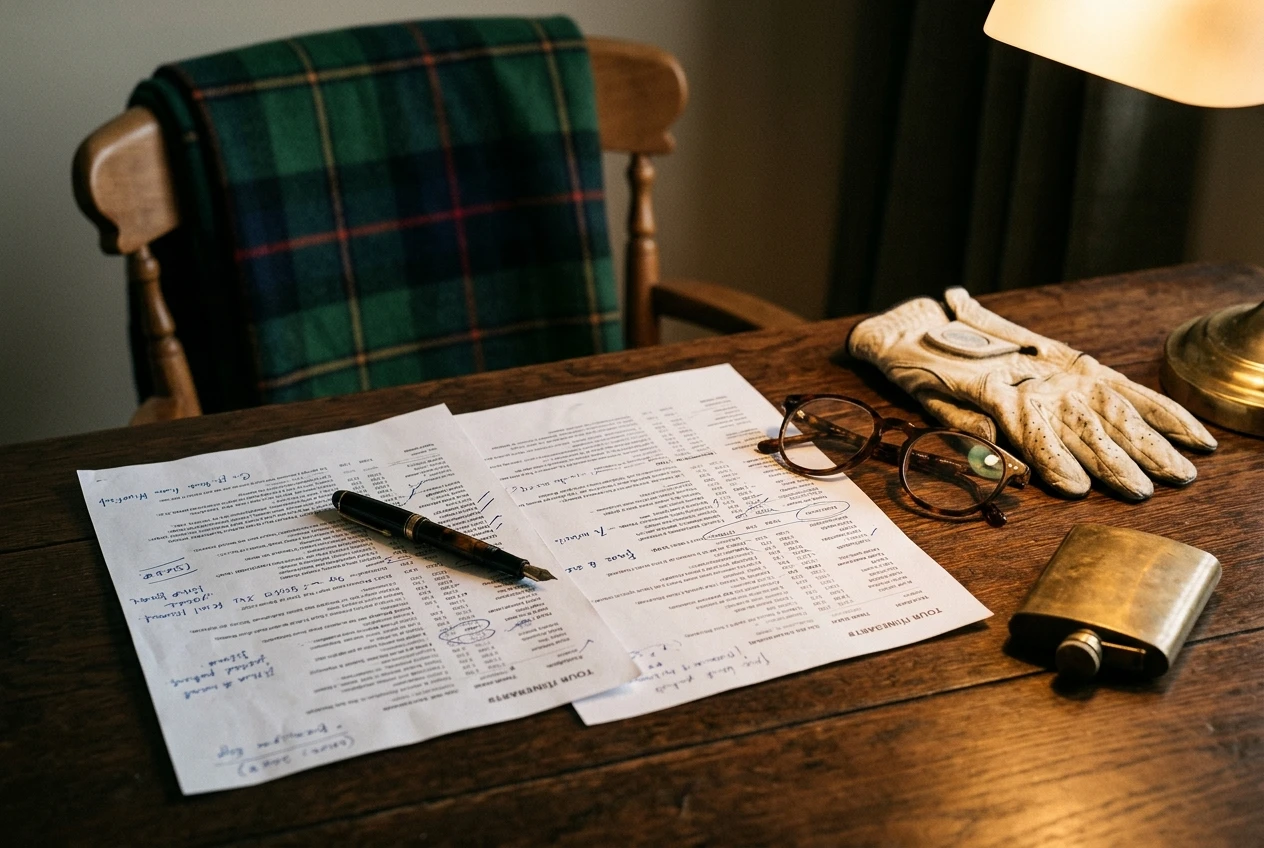
Ask each provider for a sample itinerary and a written quote, then compare them line by line. Quotes that look similar often differ in the hotel’s location, the number of rounds or the inclusion of transfers.
Is a Scotland golf trip worth it? A fair way to decide
Scotland is a significant investment of money, time and planning, and it is not the right trip for every golfer. A fair assessment weighs what you will get against what you will accept.
The case for going
- You get to play courses with centuries of history, in settings that are hard to replicate elsewhere.
- Links golf is a distinct experience, so a trip adds something new rather than repeating courses you know.
- The towns, pubs and food give the trip a character beyond the rounds.
The costs and risks
- Weather is unpredictable. You may play in rain and wind, and a round can be harder than expected.
- Prime tee times and rooms sell out early, which limits flexibility.
- Travel between regions takes time, and a rushed itinerary reduces the enjoyment.
- It can be expensive, particularly in peak season, so compare quotes before deciding.
A useful test is to ask yourself these questions:
- Would I enjoy a round in strong wind and rain, or would it ruin the day?
- Is playing a historic links a major reason for the trip, or just one reason among several?
- Can I commit to booking months ahead?
- Do I have a travel companion whose interests I need to plan around?
If most answers are yes, Scotland is likely worth it. If you want warmer weather, guaranteed sunshine and a resort-style week, another destination might suit you better. The member’s comparison of Portugal or Scotland for a bucket-list golf trip sets the two out for golfers over 40 and may help you decide.
Ready to price it out? Compare Scotland golf tour packages and tee time options through our booking partners, and start with the tour style that fits your group.
Related Post

Which Luxury Golf Resort in Ireland Suits Your Trip? A Guide to the Best Stays for Golfers Over 40
Ireland has plenty of places to stay that call themselves luxury golf resorts, and they [...]
Effective Travel Exercises For Golfers
When it comes to maintaining your golf game while on the go, starting with some [...]