
Planning a Scotland Golf Trip in 2026? Six Questions to Settle Before You Book
Scotland is where golf was organised into the game we play now, and a first visit tends to raise a handful of practical questions before any deposit goes down. Is it worth the journey, should you buy a package or build the trip yourself, what will the rounds cost, and what do you pack? This guide covers the main decisions in scotland golf tours and golf trips, in the order most first-timers face them.
Is Scotland worth a golf trip? What you actually get for the journey
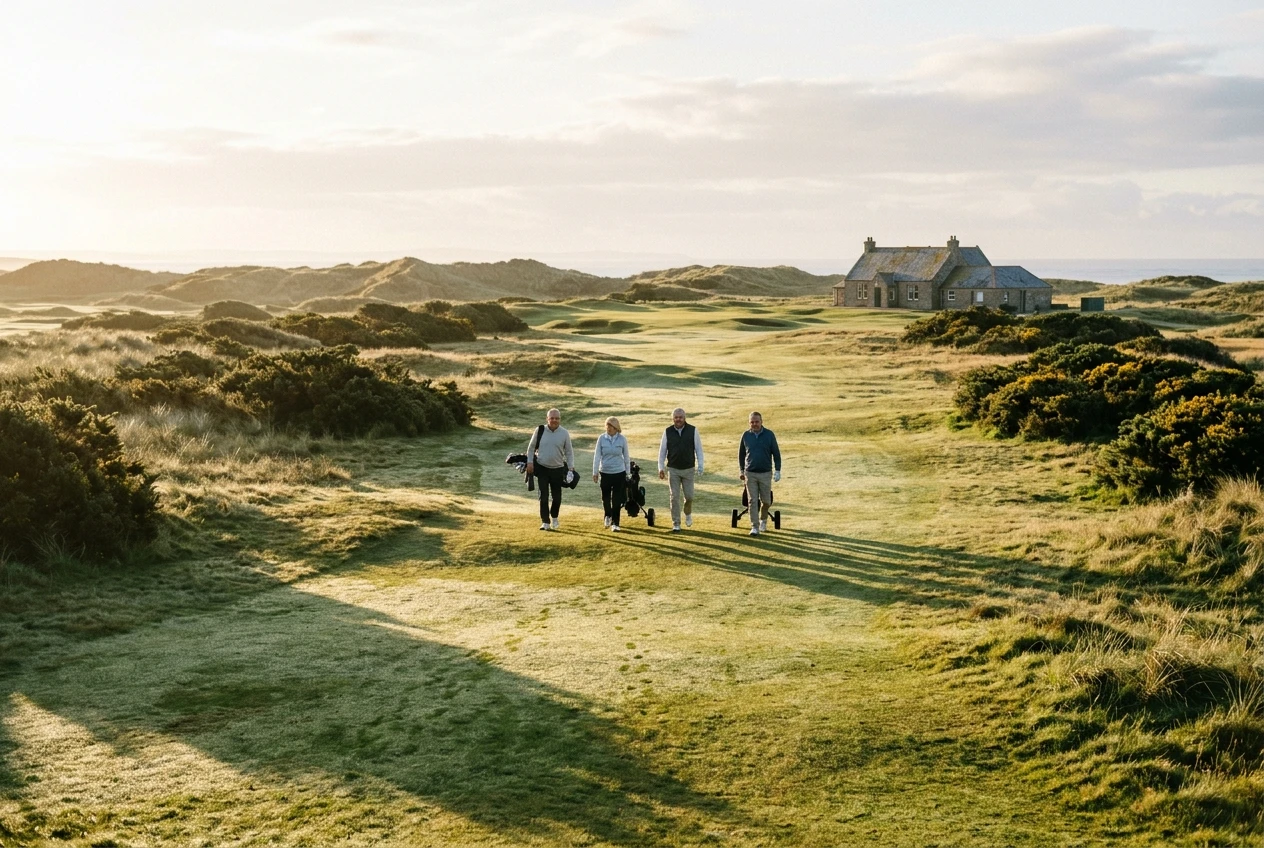
The main reason to go is the golf itself. Scotland’s links courses sit on coastal land shaped by wind and sand, and they play very differently from parkland courses at home. The ball runs on firm ground, the wind decides your club selection, and you can often putt from well short of the green. Many golfers find this a more creative way to play, and it rewards patience over power, which suits a player who has stopped chasing distance.
The setting adds to it. Several of the courses you have watched on television during the Open Championship are open to visitors, and a few are public. Walking the same fairways as the professionals is hard to match anywhere else.
If you are weighing Scotland against another destination, our Portugal or Scotland decision guide for golfers over 40 compares the two directly. If Scotland is already decided, the question becomes how to shape the trip.
Golf tour or golf trip you plan yourself? Where each one fits
A golf tour is a packaged itinerary: tee times, accommodation, often transfers and sometimes a guide, arranged by an operator and sold as one price. A trip you plan yourself means booking each piece separately: flights, a rental car or driver, hotels and every round.
A tour fits best when:
- Your preferred courses are hard to get on and you want someone who handles the booking.
- You would rather not drive on the left, navigate rural roads and coordinate tee times across several regions.
- You are travelling as a couple or small group and want the logistics settled before you leave.
Planning it yourself fits when you have a firm idea of the courses you want, enjoy the research, and want freedom to change plans day to day. It also suits a trip built around a single base, such as a week in and around St Andrews.
Many golfers land in between, using an operator for the hardest tee times and arranging the rest themselves. That choice has enough detail that it has its own article: how to choose among Scotland golf tours walks through comparing operators, so this guide leaves that comparison there.
How much are green fees in Scotland, and what changes the price
Green fees in Scotland vary a great deal, and any single figure quoted without a date goes out of date quickly. Check current rates with the course or your booking partner before you build a budget. What matters more at the planning stage is understanding what moves the price.
- The course. Famous links and Open venues charge far more than a good local course a few miles away. Mixing the two across a week keeps the total sensible without losing quality.
- The season. Summer, with its long daylight, is the most expensive and busiest period. Spring and early autumn usually cost less and are quieter, though the weather is less predictable.
- The time of day. Late-afternoon and twilight rounds are often cheaper, and in Scotland’s northern light they can still give you a full round in summer.
- What is included. Some fees cover only the round. Others come bundled with lunch, a yardage book or a practice-ground pass. A package price can hide these differences, so ask what is in it.
- How you book. Reserving through an operator or a tee time platform can cost differently than booking directly. Compare both for the courses you care about most.
Budget separately for caddies, clubhouse meals, rental clubs if you are not flying with your own, and trolleys or buggies where they are allowed. Those extras add up over a week.
Some courses also have rules on how visitors get a time. The Old Course at St Andrews, for example, runs a daily ballot for unreserved tee times alongside advance reservations, so you can plan for a round there without a guaranteed slot. Confirm current arrangements on the St Andrews Links website before you travel.
How to get to St Andrews, and how to link it with the other Open Championship courses
Most visitors fly into Edinburgh, which is the closest major international airport to St Andrews. Glasgow is the usual gateway if your itinerary leans toward the west coast. From Edinburgh you can reach St Andrews by car or by private transfer. By train, the nearest station is Leuchars, with a short taxi ride to town.
St Andrews works well as a base because several other well-known courses lie within reach:
- Carnoustie, north across the Firth of Tay, is a championship test with a reputation for difficulty.
- Muirfield, on the East Lothian coast south of the Firth of Forth, is a private club. Visitor access is limited to certain days, so check with the club early.
- Royal Troon and Turnberry, on the Ayrshire coast to the west, make a separate leg of the trip and are easier to reach from Glasgow.
A common shape for a first trip is to fly into Edinburgh, base in or near St Andrews for several rounds, then cross to Ayrshire and fly home from Glasgow. Driving times on Scottish roads often run longer than the map suggests, so leave room between a late round and an early next-day tee time. Our guide to the best golf courses in Scotland and how to fit them into one trip helps with sequencing the regions.
Hiring a caddie at St Andrews and when it is worth it
A caddie on the Old Course gives you more than a carried bag. They know where the hidden bunkers sit, how the greens break and which line off the tee keeps you out of trouble. On a course with blind shots and little room for error, that local knowledge can save strokes and spare you some frustration.
A caddie is most worth it when:
- It is your first time on the Old Course and you want to understand its strategy.
- You care more about the experience and the stories than your score.
- You are playing a round you may not repeat.
You may prefer to go without one if you want to play at your own pace, if you are playing a course with an easier layout, or if you are on a tight budget. Caddie fees and tipping customs change, so confirm the current arrangement when you book, and arrange it ahead of time rather than hoping for availability on the day. Most golfers who take a caddie on the Old Course say the round is a better memory for it, but the choice is yours.
What to wear golfing in Scotland, from the first tee to the clubhouse
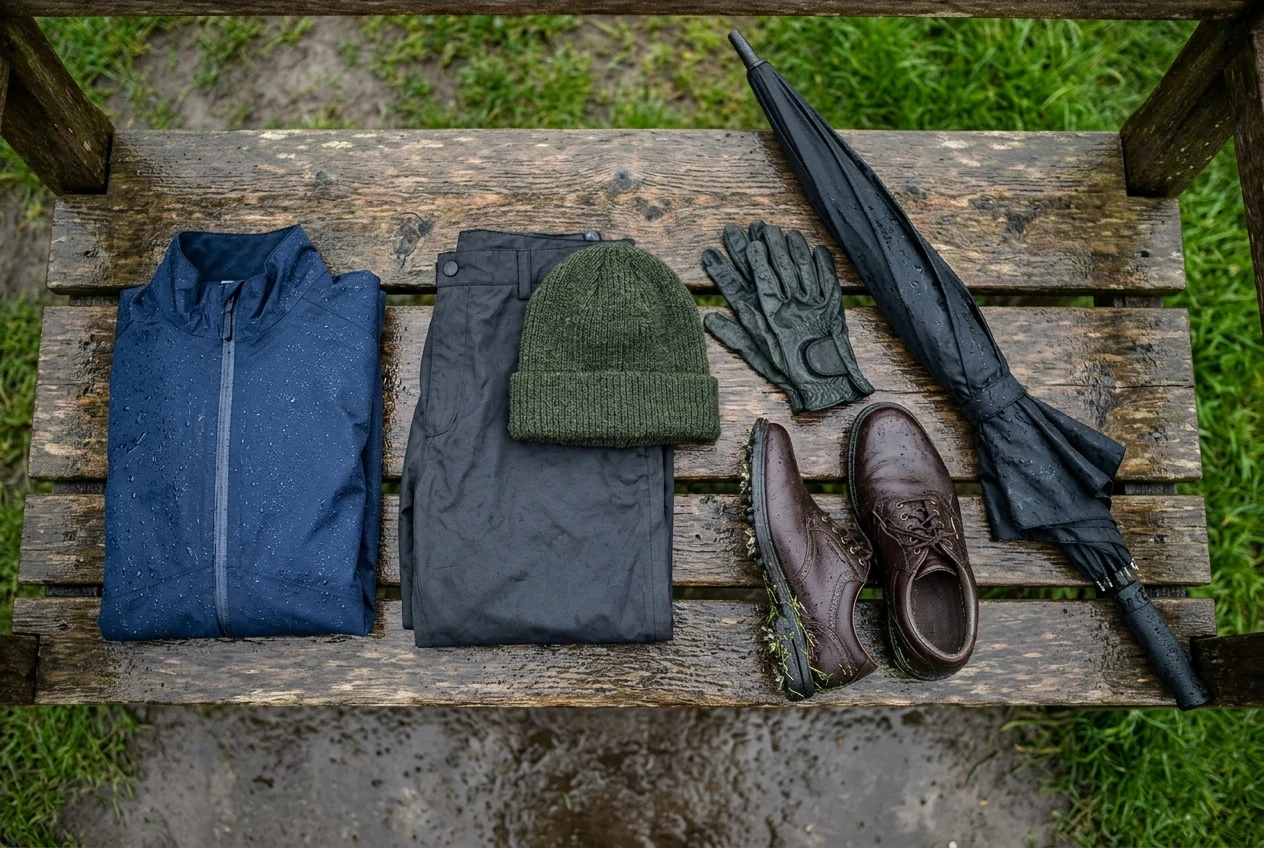
Scottish weather can change within a single round, so dress in layers you can add or remove. A breathable base layer, a mid-layer such as a sweater or quarter-zip, and a waterproof jacket cover most days. Bring waterproof trousers too, since rain combined with wind can soak through otherwise good clothing.
Other items worth packing:
- Waterproof golf shoes, with a spare pair if you can manage it.
- A warm hat and lightweight gloves, even in summer, as links courses sit exposed to coastal wind.
- A waterproof glove or two, since wet grips are hard to manage.
- An umbrella with a sturdy frame that can handle gusts.
Off the course, expect more traditional standards than you may be used to. Many clubhouses ask for a collared shirt and tailored trousers, and they may not permit denim or trainers. Some dining rooms ask for a jacket in the evening. Pack one smart outfit for dinner, and check each venue’s dress code on its website, since they differ from club to club.
How to book a Scotland golf tour, step by step, and where to go next to choose between operators
Start with a clear picture of your trip, then work through the bookings in order.
- Fix your dates and group size. Tee times at the most sought-after courses fill early, so settle these first.
- Pick your must-play courses. Choose two or three courses you would feel disappointed to miss, and build the rest around them.
- Decide between a tour and self-planning. Use the earlier section to choose, or combine both.
- Request quotes. If you are using an operator, ask for what is included in writing: rounds, accommodation, transfers, caddies and meals.
- Confirm tee times before paying in full. Make sure the courses you care about are confirmed rather than pending.
- Book flights and transfers. Align arrival and departure airports with your itinerary to avoid backtracking.
- Check the details nearer departure. Review dress codes, caddie arrangements and cancellation terms.
If you are still comparing operators, our guide to choosing among Scotland golf tours is the natural next read, as it covers what to ask each one and how to compare the answers.
Ready to price it out? Compare Scotland golf tour packages and check tee time availability through our booking partners to start shaping your trip.
Related Post
Private Golf Tour or Group Tour? How to Choose for Your Bucket-List Trip
Both a private itinerary and a seat on a group departure are managed trips. A [...]