
The Best Golf Courses in Scotland for 2026, and How to Fit Them Into One Trip
Scotland is where golf began, and the courses that made its reputation are still open to visitors. A first trip comes down to choosing which of them to play and then grouping them so you spend your days on the fairway rather than on the road. This guide covers the best golf courses in Scotland by region, then the practical questions that decide whether the trip works: booking the Old Course, handicap rules, drive times and where to stay.
Is Scotland good for golf? What makes a trip here different
Scotland’s best courses are links, laid out on sandy coastal ground between the sea and the farmland. The turf is firm, the fairways run with the land, and wind is part of every round. Bunkers are deep and often revetted, and greens are usually large with subtle slopes. You play the ground game as much as the aerial one, and that is what makes a round here feel different from parkland golf at home.
Access is the other difference. Many of the most famous courses take visitor bookings, and some towns have several championship-level links within a short drive of each other. A trip can include a major venue one day and a quieter local favourite the next, often at a lower green fee.
Summer daylight is long in the north, so a late afternoon round is realistic. Weather can change within an hour, so pack waterproofs and a warm layer whatever the month.
St Andrews and the Old Course: the round most trips are built around
Golf has been played at St Andrews for centuries, and the Old Course is the one most visitors come for. It is a public links, and the town wraps around it. You walk the same fairways that host the Open, including the Road Hole at 17 and the Swilcan Bridge on 18.
The Old Course is also unusual to play. Fairways are shared, greens are huge and double, and the bunkers are small and hard to read. A caddie is worth having on a first round, mainly for the lines off the tee and the putts on the big greens.
St Andrews is more than one course. The Links Trust runs several other layouts, and the nearby Kingsbarns, a modern links on the coast about fifteen minutes away, is a favourite for the sea views. Plan two or three rounds around the town and you have the core of a first trip.
How to book the Old Course at St Andrews
Demand for the Old Course is high and tee times are limited, so booking is the part of the trip to settle first. There are three main routes:
- Advance booking through packages. Authorised tour operators and some hotels hold tee times and can sell them with accommodation. This is the most predictable route, and the one most first-time visitors use.
- The advance ballot. The St Andrews Links Trust runs a ballot for tee times ahead of the season. Entry is free, but a place is not guaranteed.
- The daily ballot. Golfers can enter a ballot for tee times two days before play. It suits flexible travellers who are staying nearby anyway, but you should not build the whole trip on winning it.
The Old Course is closed to golf on Sundays, so plan your round around that. Ballot deadlines and rules change, so confirm the current details with the St Andrews Links Trust before you commit. If you want to compare tour operators for the booking, our guide to choosing among Scotland golf tours covers that decision.
The best courses beyond St Andrews, region by region
Grouping courses by region keeps drives short and gives each part of the trip its own character.
Fife and Angus
Beyond the Old Course and Kingsbarns, Carnoustie sits across the Tay on the Angus coast. It is known as one of the toughest tests on the Open rotation, with long par fours and narrow landing areas. Its reputation is for difficulty rather than scenery, so it suits golfers who want a serious round.
East Lothian
East Lothian packs several famous links into a small area east of Edinburgh. Muirfield is a major championship venue, though visitor access is limited, so check availability well ahead. North Berwick West Links is known for its quirky holes and the views out to the Firth of Forth. Gullane has three courses and a village setting. This is a good region for golfers who want variety without long drives.
Ayrshire and the west coast
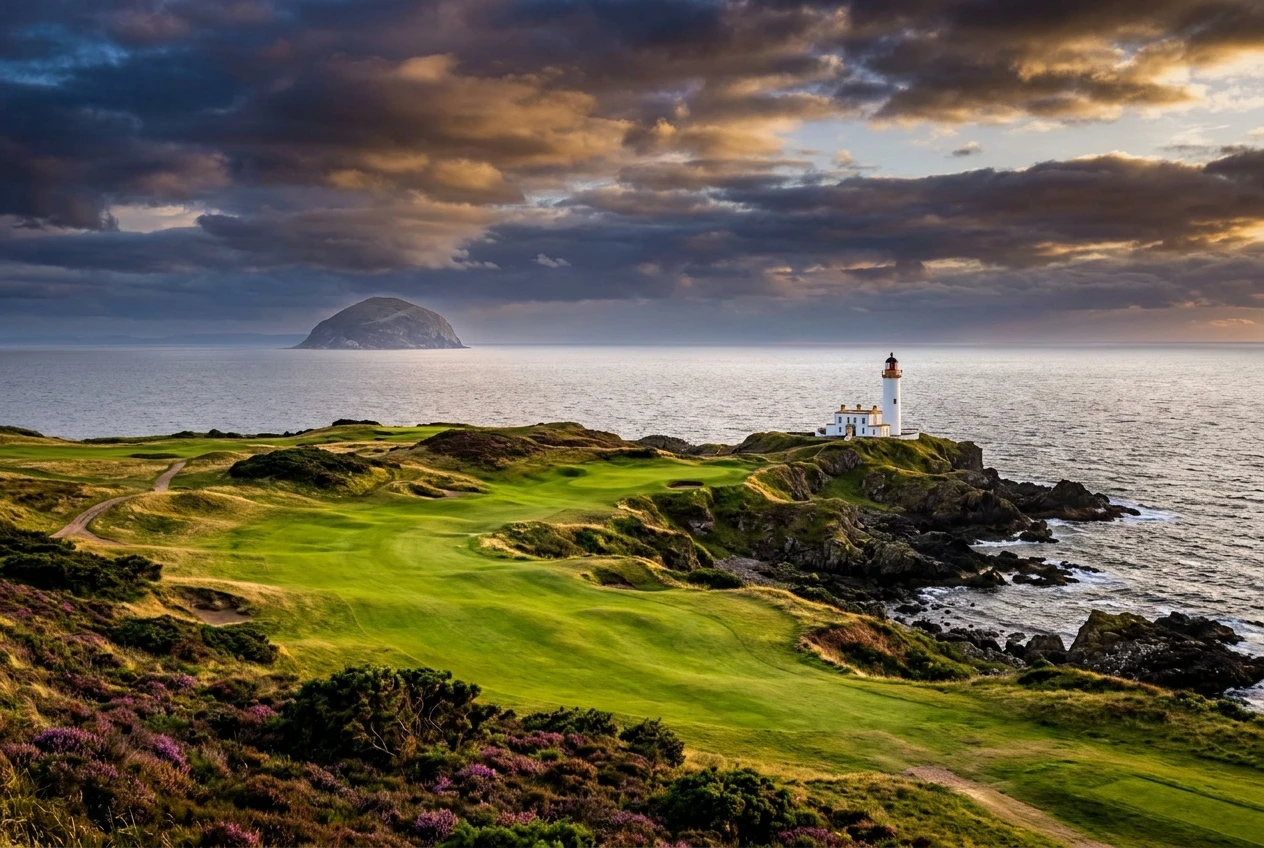
Ayrshire has some of the best golf courses in Scotland within about an hour’s drive of Glasgow. Royal Troon has hosted the Open and is known for its opening stretch and the Postage Stamp, a short par three. Prestwick is a historic links with blind shots and old-fashioned charm. Turnberry’s Ailsa course is a clifftop links with views of Ailsa Craig and the Isle of Arran. Western Gailes is another links worth a look if you want a quieter round.
The Highlands and the north
Royal Dornoch sits on the northeast coast and is often named among the finest links anywhere. It has raised greens and a quiet, remote setting, and its location makes it a trip within the trip. Castle Stuart, near Inverness, adds a modern links with views across the Moray Firth. Both suit golfers who want a less crowded experience and do not mind the extra drive north.
The northeast
Cruden Bay, near Aberdeen, has big dunes and a mix of holes that surprise on a first visit. It is a good detour if you are heading north and want a course that feels distinct from the Open venues.
Do you need a handicap to play Scotland’s best courses?
Most of the famous courses ask for proof of ability. A handicap certificate from your home club or golf association is the usual requirement, and at the Old Course there are maximum handicap limits, with different numbers for men and women. Other championship links set their own limits, and some are stricter than others.
Bring an official, current certificate rather than relying on an app screenshot. If you do not have a handicap, ask each course what it accepts before you book, because some will take a letter from your club and others will not. Rules change, so check with each course directly or through your booking partner.
Pace of play and etiquette matter too. Scottish courses expect you to keep up with the group ahead, and in summer the tee sheets run full.
How far apart are Scotland’s golf courses? Grouping rounds so you drive less
Scotland is small, but roads on the coast and in the north are slower than the map suggests. These are rough drive times to plan around, and local traffic can add to them:
- St Andrews to Kingsbarns: about fifteen minutes.
- St Andrews to Carnoustie: about forty minutes to an hour, depending on traffic and the route.
- Edinburgh to St Andrews: roughly an hour and a half by road.
- Edinburgh to the East Lothian courses: about thirty to forty-five minutes.
- Glasgow to Troon, Prestwick and Turnberry: roughly an hour, with the three courses close to each other along the coast.
- Inverness to Royal Dornoch: a little over an hour.
- Edinburgh to Dornoch: most of a day by car.
The simplest way to cut driving is to base yourself in one region and play several courses from there. A trip built on three bases (Fife, East Lothian or Ayrshire, and the Highlands) can cover the best golf courses in Scotland without a long drive on every playing day. If you are short on time, choose two regions rather than four.
Keep in mind that Scottish roads are narrow in places and you drive on the left, so allow extra time after a long flight.
Where to stay when you’re golfing in Scotland
Base yourself where the golf is. In St Andrews, staying in or near the town means you can walk to the Old Course and eat well afterwards. Hotels near the course are convenient but book up for the summer, so reserve them with your tee times.
In East Lothian, North Berwick and Gullane offer small-town stays within a short drive of several links. In Ayrshire, Troon and Ayr put you near the courses, and the Turnberry resort sits right on its own coast. In the north, Dornoch has a compact village centre near Royal Dornoch, and Inverness gives you more choice of hotels and restaurants for the Castle Stuart end of the trip.
Think about what you want from the evenings. A walkable town with restaurants suits golfers who like to wander after a round. A resort suits those who want everything in one place, including the spa and the practice facilities.
How to plan your Scotland golf trip, and whether it is worth it
A good first trip is simpler than it looks. Pick your regions, secure the Old Course tee time first, then add two or three other rounds and book rooms in the same weeks. Leave a day for rest or sightseeing so the schedule is not all golf and driving.
Whether it is worth it depends on what you want from a golf holiday. If you want history, links conditions and courses you have watched on television, few places compare. If you are still weighing other destinations, our guide to Portugal or Scotland for your bucket-list golf trip sets out the differences in climate, courses and cost for golfers over 40.
Browse Scotland golf packages and tee times through our booking partners to start building your trip around the courses you’ve shortlisted.
Related Post