Sweden or Denmark for Your Golf Trip? Seaside Links Style Versus Parkland Tradition
If you have played the Scottish links and want to know whether Sweden or Denmark makes the better golf trip, the instinct is to sort them by course type: Denmark for wind and sea, Sweden for forest and lakes. That shortcut is partly right and mostly misleading. Both countries have seaside golf and both have parkland, so the more useful question is what kind of days you want around the rounds.
This guide sorts a Sweden or Denmark golf trip by the round you are after, then by who is travelling and how much logistics you will tolerate. Treat the courses named here as starting points. Green fees, visitor times and conditions change, so confirm each course’s details on its own website before you commit.
Why “links versus parkland” is the wrong first question for Sweden and Denmark
Links golf has a specific meaning: sandy ground near the coast, firm turf, dunes, and wind that decides how you play every shot. Parkland means inland, tree-lined holes on softer ground, usually with a long club history behind the clubhouse. Scotland gives you both in abundance, and the divide runs along clear regional lines.
Sweden and Denmark do not divide that way. Denmark is a small, low-lying country with long coastlines, so a good deal of its golf sits in open, breezy terrain even when the course is not a true links. Sweden is much larger, with forest, lakes and rock inland, yet its southern coast in Skåne has sandy, wind-exposed golf as well. Falsterbo, at the southwestern tip of the country, is the name that comes up most when golfers look for a links-style round in Sweden.
So a country-level answer hides the real choice. The better first question is which region you would fly into, because within a few hours of Copenhagen you can play very different golf on either side of the Øresund.
What seaside links-style golf feels like here if you have played Scotland
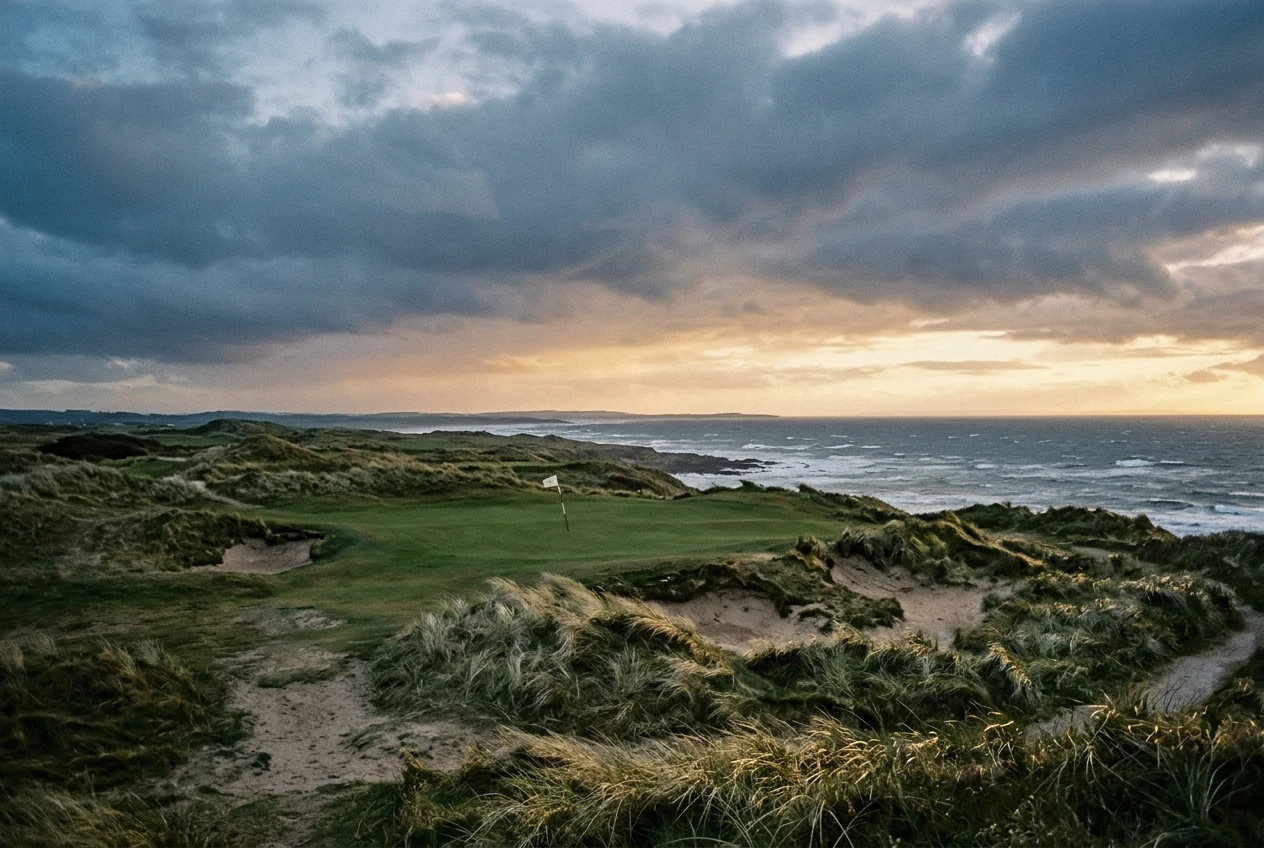
Set your expectations accurately. Seaside golf in these two countries is often described as links-style or links-like, which is a different claim from the old Scottish courses on ground that has been golfed for centuries. You will find wind, sandy soil, coastal grasses and big skies. You may find less of the bumpy, running-ball character that makes a Scottish links so particular.
That is not a drawback, just a different round. Expect to play the wind more than the contours. A low, controlled ball flight helps just as it does at home, and so does choosing a club that lets you stay under the gusts. If you enjoyed the strategy of a Scottish links more than the heritage, you will feel at home.
For Denmark, look at courses on the Jutland coast, with Skagen near the northern tip of the peninsula a frequent mention among golfers wanting seaside conditions. In Sweden, Falsterbo and the neighbouring courses in southern Skåne are the obvious places to start. Check each course’s own site for how it describes itself, since the term links gets used generously.
What the parkland and club-heritage side offers, and who it suits
Parkland golf is where both countries are strongest in sheer numbers. Sweden’s inland courses run through pine and birch, around lakes and over granite outcrops, and the larger cities have well-established member clubs on their outskirts. Bro Hof Slott near Stockholm is a well-known destination with a Stadium Course that has hosted professional events, and it suits golfers who want a resort-style, championship-standard day.
Denmark’s parkland side leans on traditional member clubs around Copenhagen, such as Royal Copenhagen, where the appeal is the clubhouse, the setting and the sense of an old club that welcomes visitors on its own terms. Further west, resort-style golf in Jutland offers a different balance, with more space and a stay attached to the course.
This side of the sport suits golfers who value presentation, calm and good conditioning over exposure to the elements. It also suits anyone travelling with a partner who plays less often, because parkland courses tend to be more forgiving when the wind is up.
How the golf culture differs: pace, clubhouse etiquette and visitor access
Most of the clubs you will want to play are member clubs first and visitor destinations second. That has practical consequences you should plan for.
- Visitor windows. Many clubs set aside specific times for guests and restrict them around member competitions. Plan your days around the course’s published visitor times.
- Handicap proof. Some clubs ask for a valid handicap certificate or a club membership card. Bring one and check the requirement before you travel.
- Dress and clubhouse manners. Expect the usual conventions of a traditional club: tidy golf clothing, and phones kept quiet in the clubhouse. The tone is more relaxed than formal, but hospitality is generally part of the experience.
- Pace. Rounds are expected to move steadily. If you are used to the unhurried rhythm of a Scottish links, prepare to keep up with the group ahead, particularly on busy summer days.
Because each club sets its own rules, a quick email or a booking partner’s confirmation is worth more than any general guide, this one included.
Matching the country to the trip: couples, buddies and mixed-ability groups
Couples. Denmark pairs golf with a compact, walkable capital and easy day trips, which suits a couple where one partner plays and the other explores. Copenhagen as a base also gives a non-golfer plenty to do. Sweden works well too, particularly if you base in Stockholm or choose a resort with spa and dining attached, but the distances between points of interest are larger.
Buddies. A group of friends chasing variety will find more range in Sweden, from forest courses to the southern coast, though that variety costs travel time. Denmark gives you a tighter itinerary with less time in the car.
Mixed-ability groups. Choose courses with several sets of tees and a layout that does not punish a high handicap. Parkland tends to be kinder than a windswept coastal course here, so a group with a range of handicaps may enjoy a parkland-heavy itinerary with one seaside round as the highlight. Check each course’s tee options and slope information on its own site.
Getting around and building the days between rounds
The geography offers a useful option. The Øresund Bridge links Copenhagen with Malmö, which puts Danish capital-region golf and Skåne golf within reach of one base. If you cannot decide, a Copenhagen stay with rounds on both sides of the water is a realistic compromise. Confirm transfer times and any toll or train details with your booking partner or a current transport source before you plan around them.
For a Denmark-only trip, flying into Copenhagen and then heading to Jutland by road or rail adds a leg, so decide early whether you want one base or two. For a Sweden-only trip, Stockholm and Skåne are far enough apart that most golfers will pick one region instead of trying both.
On non-golf days, both countries reward a little planning:
- Copenhagen: waterfront walks, museums and food markets, easy without a car.
- Stockholm: the archipelago, the old town and a strong restaurant scene.
- Skåne: coastal towns, countryside and short drives between courses.
- Jutland: beaches and the northern tip around Skagen, if you are playing there.
Summer daylight is long in both countries, so an early round and a late dinner are comfortable. Confirm the best months for your chosen course, since the playing season is shorter than in southern Europe.
If you are weighing this against a broader tour, our guide to golf in Scandinavia covers the wider region for golfers who have already done Scotland.
How to book tee times and packages without losing a day to logistics
Tee times at the most sought-after courses can be limited for visitors, so booking order matters. Settle on dates, then book the headline rounds first and build the rest around them. Leave a rest day or a lighter day if you are crossing between regions.
A few steps help the booking go smoothly:
- Confirm the visitor policy and handicap requirement on each course’s site.
- Check which days the course is closed to visitors for member events.
- Ask whether a combined golf and stay package is offered, since accommodation near the course can save a lot of transfer time.
- Request a written confirmation of tee times, green fees and any buggy or caddie arrangements.
- Build in buffer time on the day you change regions or cross the bridge.
A package built by a specialist can handle the sequencing and the transfers, which is where trips most often lose time. If you would rather manage it yourself, keep the itinerary to one base.
Our pick by golfer type
- You want the nearest thing to Scottish links: start with the Skåne coast in Sweden or the north Jutland coast in Denmark, and read each course’s own description to see how close it gets.
- You want heritage and a polished day: pick Denmark’s Copenhagen clubs or a Stockholm-area championship course, depending on which capital appeals more.
- You are travelling as a couple with different interests: choose Denmark, with Copenhagen as the base.
- You are a group of friends wanting variety: choose Sweden, and accept the extra travel.
- You are indecisive and want both: base in Copenhagen and cross the Øresund for a round in Skåne.
Once you have a shortlist of courses, check tee times and package availability through our booking partners before the best slots go, and ask for a combined golf and stay quote.
Related Post